

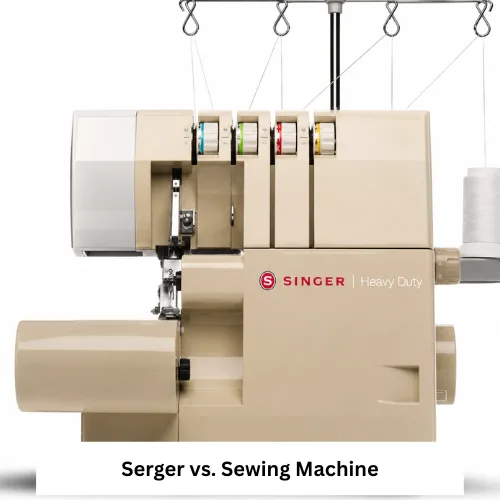
Understanding serger vs sewing machine differences helps buyers avoid choosing a machine that cannot complete their most common tasks. A regular sewing machine builds and repairs projects with straight stitches, zigzag stitches, buttonholes, and other construction functions, while a serger trims and finishes fabric edges with multiple threads.
American sewing machine buyers should think about the garments, home décor, alterations, quilting, and craft work they plan to complete. Neither machine replaces the other in every situation, nor feature details vary by model, so verify stitch options, thread capacity, included feet, needle systems, warranty terms, and support before buying.
Serger vs Sewing Machine: Core Differences
A sewing machine normally uses an upper thread and bobbin thread to form stitches. It can sew seams, topstitch, attach zippers, make buttonholes, mend fabric, and handle many general construction tasks.
A serger machine, also called an overlock machine, usually uses loopers and multiple threads to sew, trim, and wrap the raw edge in one pass. It is especially useful for seam finishing, stretch garments, knitwear, and clean inside edges.
What a Sewing Machine Does Best
A standard machine is the more flexible first purchase for most beginners. It can sew straight seams, pivot at corners, backstitch, install zippers, create buttonholes, attach many presser feet, and work on projects that need precise starts and stops.
It is also the better tool for quilting, decorative stitching, visible topstitching, patching, and construction steps that trimmed while sewing.
What a Serger Does Best
A serger creates a neat wrapped edge and can trim excess seam allowance as it sews. Differential feed on many models helps manage stretching or gathering, especially on knit fabrics, but the available range and controls are model-specific and should be verified before buying.
A serger is not normally used for buttonholes, standard zipper installation, most topstitching, or sewing deep inside a project. It works best as a companion to a regular machine.
| Feature or task | Regular sewing machine | Serger or overlock machine | What the buyer should verify |
| Basic seam construction | Strong general-purpose option | Can join and finish some seams in one pass | Stitch type, fabric range, seam allowance control |
| Raw-edge finishing | Zigzag or overcasting stitch may be used | Trims and wraps the edge efficiently | Knife control, thread setup, stitch width |
| Knit garments | Possible with suitable stitch, needle, and settings | Often helpful for stretch seams and clean edges | Differential feed, stretch performance, test fabric |
| Zippers and buttonholes | Commonly supported | Usually not the main purpose | Included feet and buttonhole method |
| Quilting and topstitching | Well suited | Limited for these tasks | Throat space, presser feet, stitch controls |
When You Need One Machine or Both
When reviewing serger vs sewing machine options, begin with the steps your projects require rather than choosing by speed or appearance.
Choose a Sewing Machine First When
Choose a regular machine first when you are learning basic sewing, making quilts, repairing clothing, installing zippers, sewing bags, creating buttonholes, or completing varied craft projects. A beginner sewing guide can help with basic operation, but hands-on practice with threading, bobbins, seam allowances, and needle changes is equally important.
Add a Serger When
Consider a serger after you regularly make knit tops, leggings, children’s clothing, activewear, or garments where finished inside seams matter. Browsing sergers and overlock machines can help you compare layouts and intended uses, but verify exact stitch capabilities for each model.
Use Both for Garment Sewing
Many garment makers construct selected seams on a sewing machine, finish edges on a serger, and return to the sewing machine for hems, zippers, buttonholes, topstitching, and detail work. These garment sewing tools serve different stages of the same project.
Thread Count, Stitch Types, and Controls
Sergers are often described by the number of threads they can use, but thread count alone does not tell you whether the machine fits your work. Check the available overlock, rolled-hem, flatlock, narrow-edge, and other stitch configurations in the exact manual.
A serger overlock machine may support several thread arrangements, but changing between them can require different threading paths, tensions, needles, or converter parts. Verify what is include and how much rethreading is required.
Important controls include stitch length, cutting width, differential feed, presser-foot pressure, thread tension, knife position, and rolled-hem setup. Some controls may be automatic or simplified, while others require manual adjustment.
Setup and Compatibility Checks
Set the serger on a stable table with enough room for fabric to move on the left side and for thread cones or spools to feed without snagging. Keep the power cord and foot control away from the cutting area and follow the manual before raising, lowering, or disengaging the knife.
Compare serger sewing machines by threading access, stitch controls, replacement-part support, and the projects you plan to make.
Compatibility checks should include:
- Correct needle system and recommended sizes
- Supported thread types and spool or cone handling
- Presser feet made for the exact model or shank system
- Availability of a waste catcher, cover, thread nets, spool caps, and tweezers
- Voltage and plug requirements
- Replacement knives, loopers, needle plates, and foot controls
- Table footprint and clearance for opening covers
Do not assume universal accessories fit. Similar-looking feet, knives, and needle plates may have different mounting points.
Conclusion
The right answer to serger vs sewing machine depends on the work you need to complete. A regular machine is usually the stronger first choice for varied construction, repairs, quilting, zippers, and buttonholes, while a serger adds fast edge finishing and useful control for many garments and knits. Compare confirmed features, practice threading, and verify parts, warranty, returns, and support through American sewing machine before choosing.
FAQ
Can a serger sew a complete garment?
It can sew and finish many garment seams, but a regular machine is still needed for common tasks such as zippers, buttonholes, and topstitching.
Is a serger suitable for beginners?
Yes, but threading and tension require practice. Clear guides, accessible loopers, and reliable support make learning easier.
Does a serger always cut fabric?
Most sergers have a cutting knife, but some models allow it to be lowered or disengaged. Verify the exact model’s controls.
Can a sewing machine finish raw edges?
Yes. Zigzag and overcasting stitches can reduce fraying, although the result differs from a trimmed overlock edge.
What should I test before buying a serger?
Test threading access, stitch quality on your fabrics, differential feed, noise, vibration, controls, and accessory changes.
