

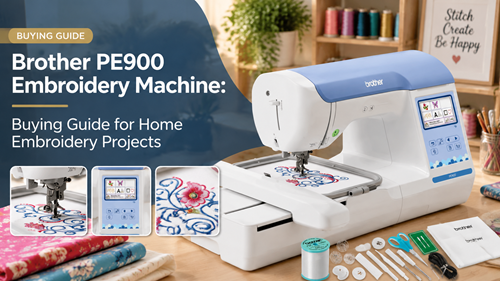
The Brother PE900 Embroidery Machine should be judged by the work it will do in a real sewing or embroidery space, not by a feature list alone. This guide is written for home embroiderers comparing a dedicated machine for personalized craft projects. It focuses on project fit, setup, workflow, material handling, repeatability, and the practical […]
Author Archives: Margaret Clark
26
Sep
Sep
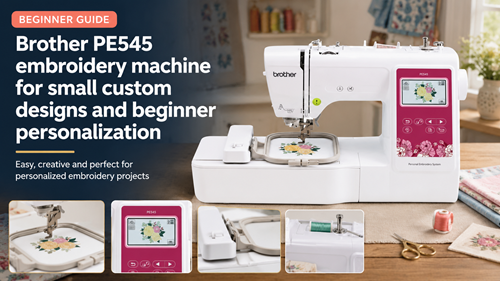
The Brother PE545 embroidery machine is built around a compact 4×4 embroidery workflow that suits beginners making monograms, patches, small gift designs, and personalized accents. A small field can actually make learning easier because it encourages manageable projects and faster test samples. The important part is understanding how wireless transfer, design size, hoop placement, lettering, […]
25
Sep
Sep
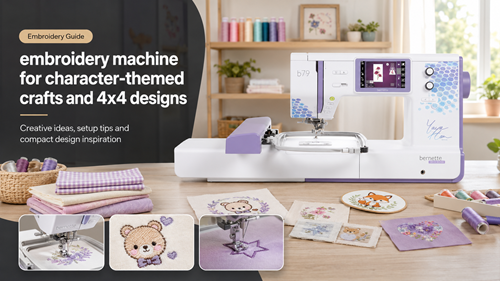
An embroidery machine with a 4×4 field can produce a surprising range of character-themed crafts, names, patches, small motifs, and children’s-item personalization when the design is chosen for the available space. The limitation is not just the hoop frame: the design’s stitch field, density, orientation, fabric support, and safe placement all matter. Beginners get better […]
The Brother XM2701 sewing machine is designed around the kind of functions beginners use while learning garment repairs and basic construction: straight seams, zigzag, buttonholes, free-arm access, common presser feet, and straightforward threading. For a first-time garment sewist, the most important question is not how many techniques can be attempted on day one. It is […]
21
Sep
Sep
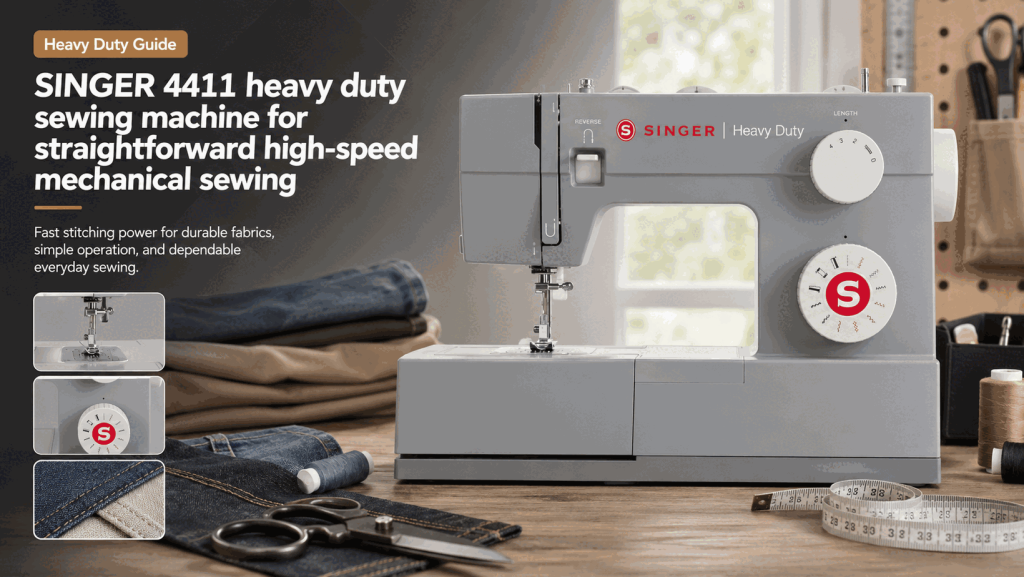
The SINGER 4411 heavy duty sewing machine is aimed at sewists who prefer direct mechanical controls, useful utility stitches, and faster straight-seam work without a large menu of computerized functions. The machine can be attractive for denim hems, canvas-style projects, home décor, repairs, and repetitive seams, but “heavy duty” does not remove the need for […]
Sewing Tools for Home Tailoring
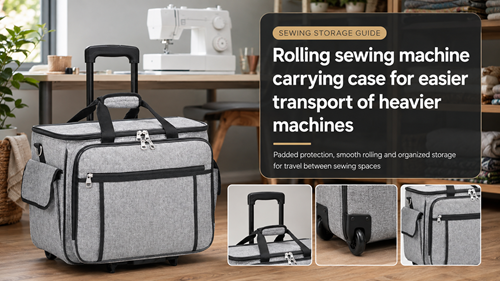
Rolling sewing machine carrying case for easier transport of heavier machines
16
Sep
Sep
A rolling sewing machine carrying case can reduce strain when a heavier machine has to travel through parking lots, hotel corridors, retreat centers, or long classroom hallways. Wheels solve only part of the problem, though. The case still needs a stable base, a handle that does not flex excessively, enough internal support to control machine […]
Sewing Tools for Home Tailoring
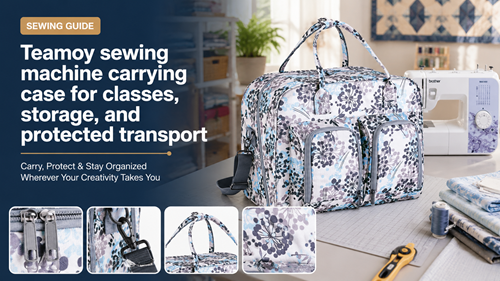
Teamoy sewing machine carrying case for classes, storage, and protected transport
14
Sep
Sep
A Teamoy sewing machine carrying case can make weekly sewing classes much easier when the machine fits securely, the base is supported, and the accessories you actually need have a predictable place. The goal of a class bag is different from long-term storage: it has to handle repeated lifting, car loading, short walks, table setup, […]
Sewing Tools for Home Tailoring
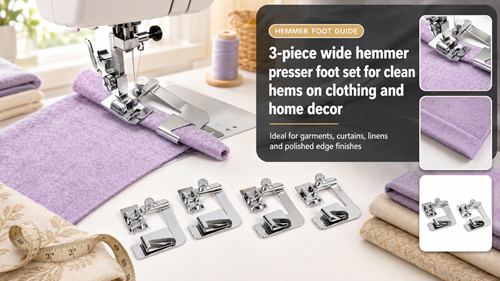
3-piece wide hemmer presser foot set for clean hems on clothing and home decor
09
Sep
Sep
A 3-piece wide hemmer presser foot set can speed up repetitive hems when the foot width, fabric behavior, and starting technique all match the project. The attachment works by guiding a folded edge while the machine stitches it down, but it is not automatic: the fabric still has to enter the guide evenly, the fold […]
Sewing Tools for Home Tailoring
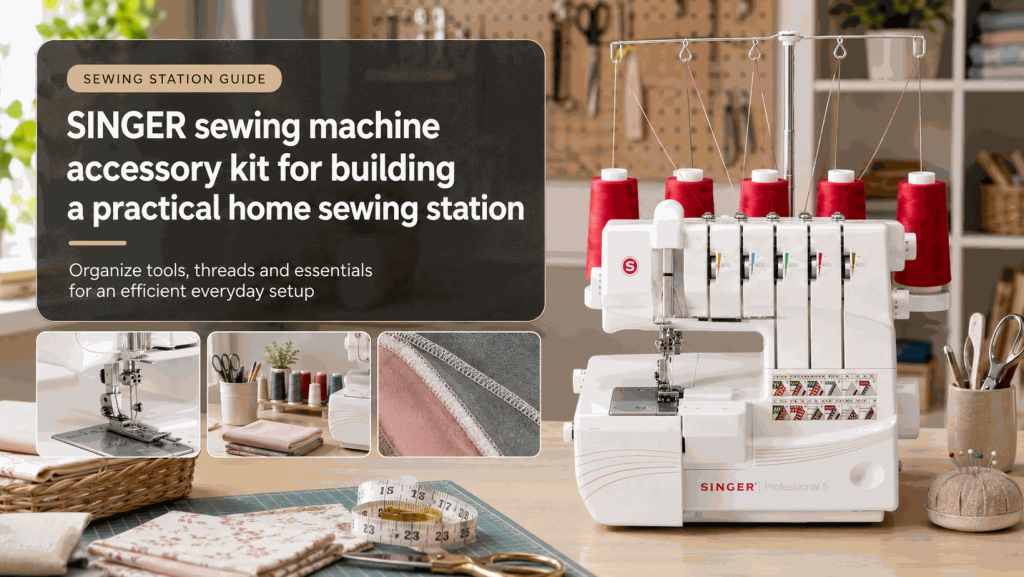
SINGER sewing machine accessory kit for building a practical home sewing station
07
Sep
Sep
A SINGER sewing machine accessory kit is most valuable when it solves the jobs you actually do instead of filling a drawer with parts you never touch. A practical home sewing station needs compatible bobbins, the right needles, a few useful presser feet, measuring and cutting tools, basic maintenance supplies, and organized storage. The goal […]
Uncategorized
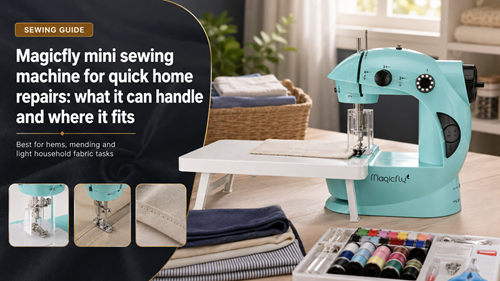
Magicfly mini sewing machine for quick home repairs: what it can handle and where it fits
02
Sep
Sep
The Magicfly mini sewing machine is most useful when you treat it as a compact tool for straightforward home repairs rather than a replacement for every full-size machine. For apartment dwellers, dorm rooms, occasional mending, and small craft tables, its appeal is simple: it takes little space, is easy to bring out for a short […]