

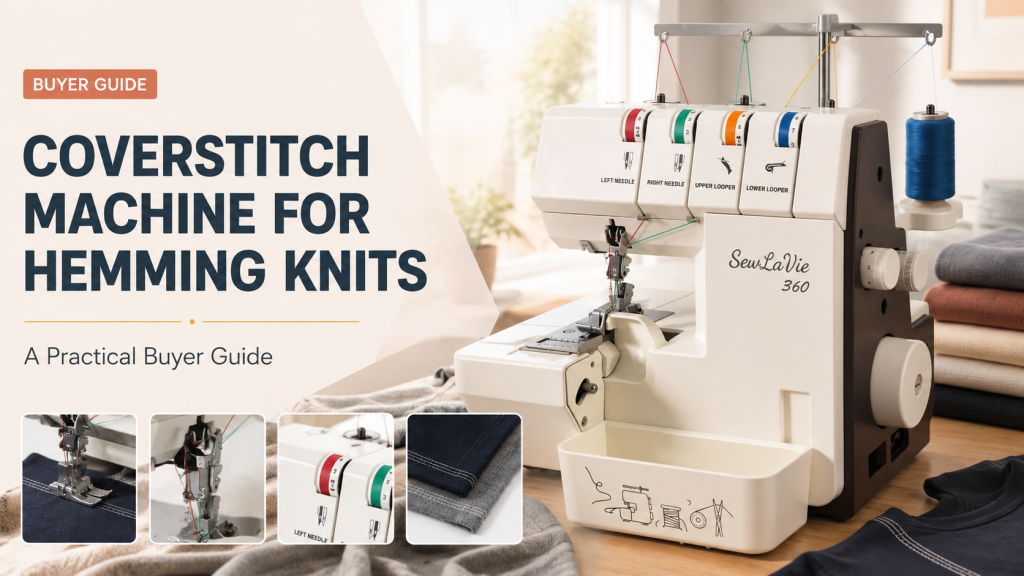
A coverstitch machine for hemming knits creates the familiar parallel needle lines seen on T-shirts and activewear while loopers cover the raw edge underneath. Its value comes from stretch, a clean commercial appearance, and faster repeated hemming—not from replacing every function of a sewing machine or serger. Buyers should compare fabric handling, differential feed, seam […]
Tag Archives: Seam Finishing
Sewing Tools for Home Tailoring
Side Cutter Presser Foot: Can It Replace a Serger for Simple Projects
21
Aug
Aug
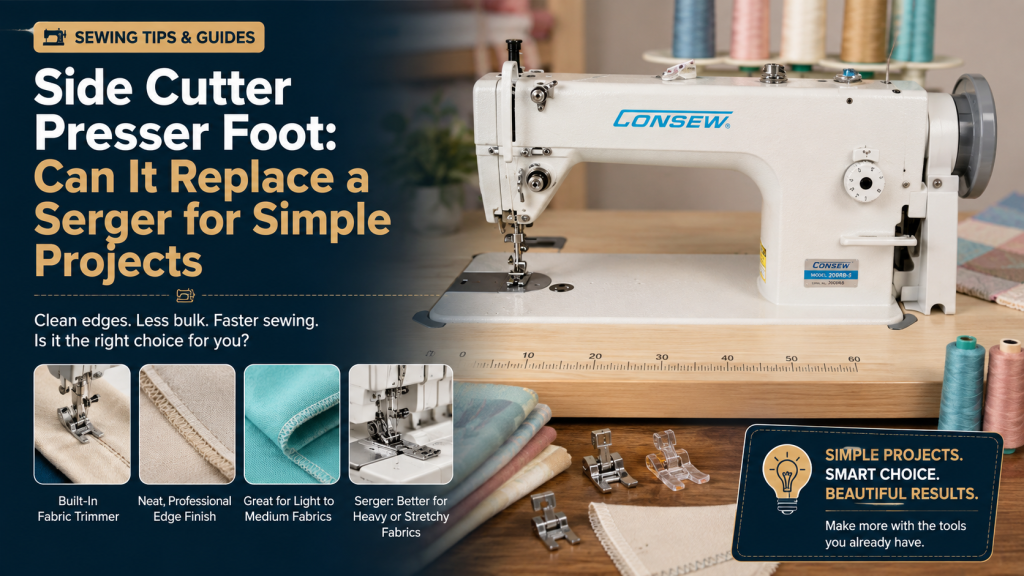
A side cutter presser foot can trim a narrow amount of fabric while a domestic sewing machine forms an overcasting stitch near the edge. For occasional woven-fabric projects, it can create a tidier finish than a plain zigzag and reduce one trimming step. It does not duplicate a serger’s loopers, differential feed, cutting capacity, speed, […]

10
Aug
Aug
A serger for stretch fabrics should create a seam that lies flat, stretches with the garment, and recovers without popped needle threads. The machine can trim, seam, and overcast in one pass, but the default settings are only a starting point. Fabric recovery, knit structure, number of layers, thread, and seam direction all change the […]
17
Jul
Jul
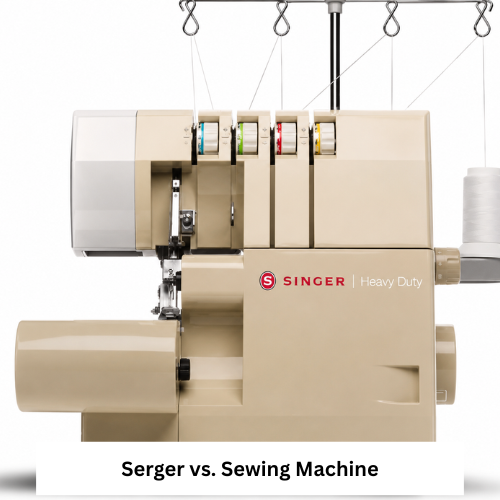
Understanding serger vs sewing machine differences helps buyers avoid choosing a machine that cannot complete their most common tasks. A regular sewing machine builds and repairs projects with straight stitches, zigzag stitches, buttonholes, and other construction functions, while a serger trims and finishes fabric edges with multiple threads. American sewing machine buyers should think about […]