

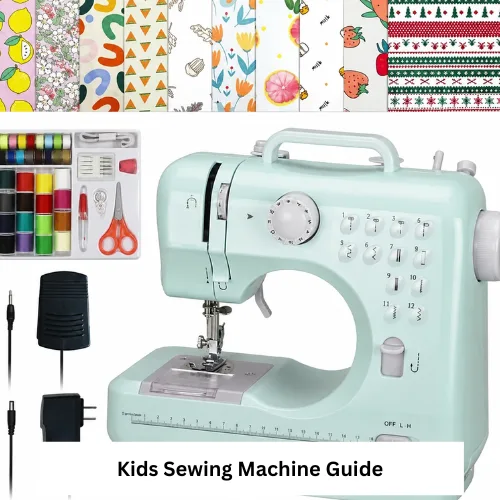
A kids sewing machine should make early practice easier without treating a working needle, moving parts, electricity, or sharp tools like toys. The right choice depends on the learner’s maturity, hand control, attention span, project goals, and the amount of direct adult supervision available.
American sewing machine buyers should compare speed control, needle-area protection, threading visibility, stitch simplicity, machine stability, and support before ordering. Age labels, included accessories, dimensions, and safety features vary by model, so verify the manufacturer’s guidance and the exact product details before buying.
How to Choose a Kids Sewing Machine Safely
Start by deciding whether the learner needs a compact practice machine or a dependable full-size beginner model. A very small machine may be easier to carry, but it can also have a lighter base, fewer controls, limited fabric handling, or harder-to-find replacement parts.
The best beginner choice is usually the machine that can sew slowly, remain stable on the table, and allow an adult to supervise threading, needle changes, bobbin handling, and troubleshooting.
Match the Machine to the Learner
Consider coordination, patience, reading ability, and whether the child or teen can follow a sequence without reaching near the needle. Manufacturer age guidance is only one factor. An adult should decide when the learner is ready and remain close during early sewing lessons.
A teen sewing machine may be the same reliable mechanical or computerized beginner model an adult would use. The difference is the learning plan: fewer stitch options at first, controlled speed, short sessions, and projects that build one skill at a time.
Look for Manageable Speed
A low-speed mode, speed slider, or gentle foot control can help a learner guide fabric without rushing. Some models offer more than one speed method, while others depend entirely on pedal pressure. Verify before buying how speed is controlled and whether the control remains predictable at the slowest setting.
A two-speed beginner sewing machine may be useful for early practice when the speed change is easy to understand, but confirm how the switch, start/stop button, and foot pedal interact.
| Machine type | Best suited to | Helpful features | Possible limitations | What to verify before buying |
| Compact or mini machine | Short practice sessions and simple light-fabric projects | Small footprint, simple controls, easy storage | May be less stable, less repairable, or limited in stitch quality | Needle guard, speed control, fabric range, replacement parts |
| Full-size mechanical beginner machine | Learners building long-term sewing skills | Straightforward dials, common stitches, wider accessory support | Foot pedal control may require practice | Slow-speed response, weight, threading path, included feet |
| Full-size computerized beginner machine | Teens or supervised learners comfortable with buttons and screens | Speed slider, stitch selection, error prompts on some models | More settings can distract a new learner | Lockout controls, start/stop behavior, screen clarity, support |
| Handheld mending device | Temporary repairs only | Portable and compact | Not a substitute for structured sewing lessons | Intended fabric, stitch security, safety instructions |
Easy Features That Support Learning
A simple stitch machine should make straight stitch, zigzag, reverse sewing, stitch length, and thread tension easy to identify. Large printed labels, a clear threading diagram, and a top or front-loading bobbin that can be checked without disassembling the machine may reduce frustration.
Browse sewing machines for beginners with a short skill list in mind rather than choosing the model with the most decorative stitches. Early learners benefit more from consistent feeding, visible controls, and clear instructions.
Size, Stability, and Workspace Fit
Measure the table, storage shelf, and carrying space. The machine should sit fully on a flat, stable surface with enough room for both hands to guide fabric in front and to the left of the needle.
A lightweight unit is easier to move, but it should not slide when sewing. Use a stable table and an appropriate anti-slip surface if the manual permits it. Keep drinks, loose cords, pets, long hair, jewelry, and sleeves away from moving parts.
A mini sewing machine for beginners may fit a small workspace, but confirm that the base remains stable and that the learner can comfortably reach the controls without leaning across the needle area.
Compatibility and Supply Checks
Before buying, confirm the machine uses needles, bobbins, presser feet, and power accessories that can be replaced easily. Do not assume a common-looking bobbin or foot is compatible.
A beginner sewing machine should have a clear manual and access to basic replacement items. Check the exact needle system, bobbin class, foot-control connection, power adapter, presser-foot style, and recommended thread.
Also verify:
- Fabric types the machine is intended to handle
- Maximum recommended fabric layers or thickness, when documented
- Whether the foot pedal, adapter, cover, and starter accessories are included
- Availability of replacement needles, bobbins, feet, belts, adapters, and foot controls
- Voltage and plug requirements
- Warranty, return conditions, and support contacts
Do not test a learner on thick, slippery, stretchy, or expensive fabric until basic control is consistent on scrap cotton or another fabric recommended by the manual.
Easy Sewing Projects for Kids and Teens
Start with straight lines on paper only when the manufacturer permits needle use without thread and an adult supervises closely. Otherwise, use fabric scraps with drawn guide lines.
Good easy sewing projects include:
- Fabric bookmarks
- Simple drawstring bags
- Straight-edged pillow covers
- Reusable fabric napkins
- Felt pouches with adult-prepared pieces
- Practice seam samplers
Avoid projects with thick seams, tight curves, zippers, buttons, elastic casings, or slippery fabrics until the learner can start, stop, reverse, pivot, and guide fabric safely.
A beginner sewing machine accessory kit can be convenient, but verify every item is compatible and keep pins, seam rippers, rotary cutters, and sharp scissors under adult control.
Conclusion
A well-chosen kids sewing machine should support careful learning, predictable slow-speed control, stable fabric handling, and close adult supervision. Focus on simple controls, compatible supplies, safe setup, repairable parts, and realistic easy sewing projects instead of choosing only by size or appearance. American sewing machine can help families compare beginner-friendly options while keeping model-specific details subject to verification.
FAQ
What age can a child start using a sewing machine?
Read the manufacturer’s age guidance and judge the learner’s maturity, coordination, and ability to follow safety instructions. Direct adult supervision is essential.
Is a mini machine better for a child?
Not always. A mini machine saves space, but a stable full-size beginner model may offer smoother control, better parts access, and longer use.
What safety feature matters most?
Predictable low-speed control and close supervision are critical. Needle guards, clear controls, and stable placement also help.
What should a beginner sew first?
Start with straight seams on stable scrap fabric, then make simple projects such as bookmarks, napkins, or basic drawstring bags.
How can I stop thread tangles?
Rethread correctly, insert the bobbin as directed, hold thread tails when required, lower the presser foot, and test slowly on scrap fabric.
