

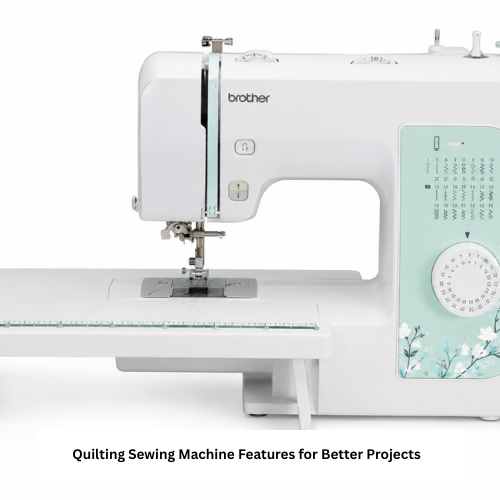
A quilting sewing machine should help you sew quilt layers smoothly, keep stitches even, and give you enough room to manage fabric without fighting the machine. Quilters, DIY crafters, beginners, embroidery users, and home sewers should look beyond stitch count and focus on space, feeding, control, and compatibility.
A sewing machine for quilting does not need to be complicated, but it should match the type of quilting you want to do. Small patchwork, baby quilts, free motion quilting, and larger projects can require different setup choices.
How to Choose a Quilting Sewing Machine for Home Projects
A quilting sewing machine should have stable feeding, good speed control, enough throat space for your project size, and accessory support. If a listing does not confirm throat measurements, extension table details, or included quilting feet, verify before buying.
A walking foot is helpful for feeding quilt layers evenly, especially when sewing straight-line quilting, binding, or layered fabric. It does not replace skill or setup, but it can reduce shifting when used with the right needle, thread, and stitch length.
Throat Space and Table Support
Throat space is the area between the needle and the machine body. A large throat sewing machine can make it easier to roll and move a quilt, but the right size depends on your project. For small quilts or patchwork, a standard home setup may work. For larger quilts, more space and a flat extension surface can reduce drag.
The Singer 9960 Sewing Quilting Machine is one option buyers may compare when looking for a home quilting setup, but current included accessories and specifications should always be verified before buying.
| Feature | Why It Matters | Best For | What to Verify Before Buying |
| Throat space | Gives room to move quilt layers | Larger quilts | Exact throat measurement |
| Walking foot support | Helps feed layers evenly | Straight-line quilting | Foot compatibility |
| Free motion option | Allows manual quilt designs | Custom quilting | Feed dog drop or cover method |
| Extension table | Supports quilt weight | Larger projects | Included or sold separately |
| Speed control | Helps beginners sew steadily | Detailed quilting | Speed settings and pedal control |
| Quilting stitches | Adds decorative options | Borders and finishing | Stitch list and usability |
Quilting Stitches and Free Motion Quilting
Built-in quilting stitches can be helpful, but they should be easy to select and adjust. Look for stitch length and width control, because quilting projects often need small changes for better results.
For free motion quilting, check whether the machine supports lowering feed dogs or using a feed dog cover. Also confirm darning foot or free motion foot compatibility. Practice on quilt sandwiches before working on the final quilt.
A quilting presser foot kit may help with piecing, walking, or free motion techniques, but always check low-shank, high-shank, or brand compatibility before buying accessories.
Setup Tips for a Home Quilting Setup
Use a stable table with enough space around the machine. Support the quilt so its weight does not pull against the needle. A slippery or uneven surface can affect stitch quality and make fabric harder to control.
Use the correct needle for the fabric and batting. Replace dull needles often, especially after large projects. Test thread, tension, stitch length, and batting thickness before quilting the final piece.
For buyers comparing broader options, top rated quilting sewing machines can be a useful starting point, but the best machine still depends on your project size, budget, space, and accessories.
Compatibility Notes for Quilting Buyers
Check bobbin type, needle system, presser foot fit, extension table availability, walking foot compatibility, and free motion support. If you use embroidery features too, confirm hoop size, embroidery file support, and whether quilting and embroidery accessories are included or sold separately.
American sewing machine shoppers should also verify warranty terms, return policy, delivery condition, and replacement part availability before choosing a quilting machine.
Troubleshooting Quilting Problems
If quilt layers shift, use a walking foot, baste more securely, or reduce quilt drag. If stitches skip, change the needle, rethread the machine, and check tension. If thread breaks during free motion quilting, slow down, check needle size, and test a different thread path or thread type.
Uneven stitches during free motion quilting often come from inconsistent hand movement and speed. Practice on scraps and avoid pulling the quilt too hard.
Maintenance Advice for Quilting Machines
Quilting creates lint from fabric and batting. Clean the bobbin area often, change needles after long sessions, and follow the manual for oiling if required. Do not use compressed air unless the manual allows it, because it may push lint deeper into the machine.
Practical Buying Checklist
Before choosing a quilting sewing machine, check:
- Machine size and throat space for your quilt projects
- Extension table availability or compatibility
- Walking foot and free motion foot compatibility
- Feed dog drop or feed cover option
- Stitch length, width, and speed control
- Needle, bobbin, and thread compatibility
- Stability and table support
- Cleaning and lint maintenance needs
- Safety around needles, cords, and moving quilt layers
- Warranty and return policy
- Replacement parts and accessory availability
- Delivery condition and included accessories
- Product-specific details you should verify before buying
Conclusion
A quilting sewing machine should give you control, space, feeding support, and accessory compatibility for the quilts you want to make. Focus on throat space, walking foot support, free motion options, setup comfort, and maintenance before buying so your home quilting setup stays practical and enjoyable.
FAQ
What is the most important feature in a quilting sewing machine?
Throat space, feeding control, and accessory compatibility are often more important than having many decorative stitches.
Do I need a walking foot for quilting?
A walking foot is helpful for straight-line quilting and binding because it helps feed quilt layers evenly.
Can I do free motion quilting on a home machine?
Yes, if the machine supports feed dog drop or a feed cover and works with a free motion or darning foot.
What throat space do I need for quilting?
It depends on quilt size. Larger quilts are easier with more throat space, but verify exact measurements before buying.
How often should I clean a quilting machine?
Clean lint regularly during quilting projects, especially when using batting or fabric that sheds fibers.
