

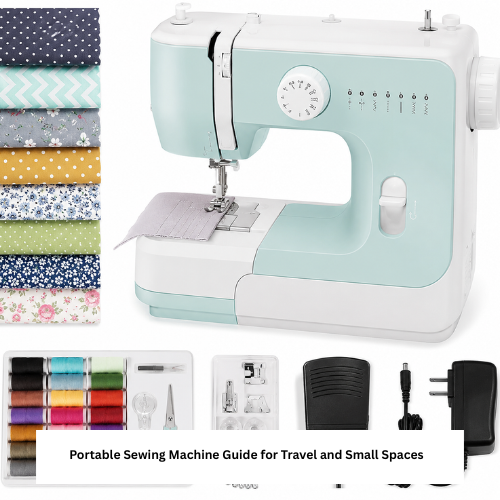
A portable sewing machine is helpful for small apartments, dorm rooms, travel sewing, quick repairs, beginner practice, and craft projects where space is limited. The right choice should be easy to store, simple to set up, and stable enough for the fabric you plan to sew.
Portable does not always mean the same thing as mini. Some portable models are full-featured but lightweight, while a mini sewing machine may be best for simple repairs and basic learning. Buyers should compare size, weight, stitch options, power source, accessory support, and return policy before buying.
How to Choose a Portable Sewing Machine for Small Spaces
A portable sewing machine should fit your work area without making sewing uncomfortable. Measure your table, storage shelf, closet space, or travel bag before choosing. If the product page does not confirm dimensions or weight, verify before buying.
A mini sewing machine can be useful for very small rooms, but check whether it supports the fabrics and stitch types you need. Some mini models are better for light cotton and simple repairs, not thick fabric or long sewing sessions.
Portable, Compact, or Mini: What Is the Difference?
A compact sewing machine is usually smaller than a standard model but still useful for regular home sewing. A mini model is smaller and easier to store, but may have fewer features. A travel sewing machine should be easy to carry, protected during transport, and stable when placed on a flat surface.
For apartment sewing, a compact sewing machine can be a practical middle option because it saves space without feeling too limited for basic projects.
| Option | Best For | Main Benefit | What to Verify Before Buying |
| Mini sewing machine | Simple repairs and beginners | Very easy storage | Fabric limits, stitch options, power source |
| Compact sewing machine | Apartments and small desks | Better balance of size and features | Weight, table space, accessory support |
| Lightweight sewing machine | Moving between rooms | Easier carrying | Handle, case, stability |
| Travel sewing machine | Classes or trips | Portable setup | Voltage, foot pedal, carrying protection |
| Full-size portable machine | Regular home sewing | More comfort and control | Storage space and machine weight |
Storage and Travel Setup Tips
Keep your machine in a dust-free place and avoid storing it with the needle down in fabric. Use a cover or case if the machine will be moved often. A sewing machine carrying case can help protect the machine, pedal, cord, manual, bobbins, and small tools.
If you need to roll the machine through a hallway, class, or craft event, a rolling sewing machine carrying case may be easier than lifting a heavy bag. Always confirm machine fit before buying a case.
Compatibility Notes for Portable Machines
Check bobbin type, presser foot style, needle system, power cord, and foot pedal compatibility. Do not assume accessories from another machine will fit. If you plan to sew buttonholes, zippers, hems, or basic quilting, confirm the included feet and stitch features.
For travel, check the power requirements and plug type. If you plan to use the machine away from home, verify whether it uses a standard cord, batteries, or another power setup before buying.
Safety Tips for Small Spaces
Use a stable table and keep the power cord away from walking paths. Do not sew on a bed, couch, or uneven surface. Keep scissors, pins, needles, and seam rippers in a closed container, especially in shared rooms or homes with children.
If the machine vibrates, moves, or sounds strained, stop and check the surface, fabric thickness, needle, and threading.
Troubleshooting Common Portable Machine Problems
If stitches loop underneath, rethread the machine and check bobbin direction. If the needle breaks, make sure the needle is installed correctly and is suitable for the fabric. If fabric jams, stop sewing, raise the needle if possible, remove the fabric gently, and clean the bobbin area.
A small sewing machine may struggle with thick seams, heavy denim, or layered upholstery fabric. Use the right machine for the project and avoid forcing fabric through the feed area.
Maintenance Advice for Easy Storage Machines
Clean lint after projects, especially if you sew fuzzy fabric. Replace dull needles, keep the power cord wrapped loosely, and store the foot pedal where it will not be crushed. Before long storage, remove thread tension from the needle area and cover the machine.
American sewing machine buyers should also check support, return policy, and replacement accessory availability before choosing a portable model.
Practical Buying Checklist
Before choosing a portable sewing machine, check:
- Machine size for your table, shelf, closet, or travel bag
- Weight and handle comfort if you move it often
- Fabric compatibility for your planned projects
- Needle, bobbin, presser foot, and pedal compatibility
- Stitch options for repairs, hems, zippers, and crafts
- Power source and cord safety
- Storage case or cover availability
- Noise and vibration control
- Cleaning and maintenance steps
- Warranty and return policy
- Replacement parts and accessories
- Delivery condition and packaging
- Product-specific details you should verify before buying
Conclusion
A portable sewing machine can make sewing easier in apartments, small rooms, classrooms, and travel settings, but buyers should balance size with stability and useful features. Choose a model that fits your space, supports your fabric, and has the accessories and support you need before buying.
FAQ
Is a portable sewing machine good for beginners?
Yes, it can be good for beginners if it has simple controls, clear threading, stable stitching, and support for basic projects.
Can a mini sewing machine sew denim?
Some mini machines may sew very light denim, but thick denim seams can be too much. Verify fabric capacity before buying.
What should I check before buying a travel sewing machine?
Check weight, size, power source, foot pedal, included accessories, and whether a case is available.
How do I store a small sewing machine safely?
Cover it, keep it dry, store accessories separately, and avoid placing heavy items on top of the machine.
Why does my compact machine keep jamming?
Common reasons include incorrect threading, wrong bobbin direction, dull needle, lint buildup, or fabric that is too thick for the machine.
