

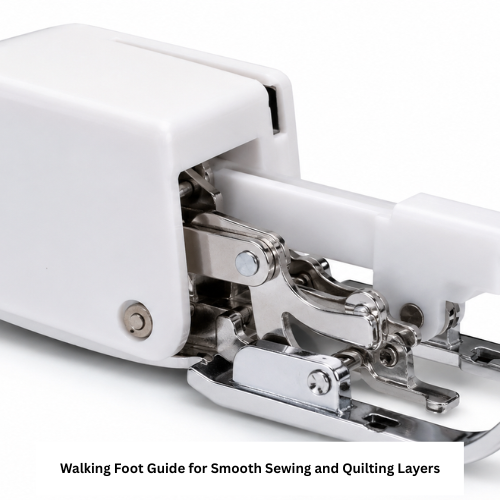
A walking foot helps move the upper fabric layer while the feed dogs move the lower layer. It is useful for quilts matching patterns slippery materials and stacked layers that tend to shift.
It is not needed for every seam. American sewing machine readers should identify the feeding problem and confirm the machine shank mounting method and approved stitch width before buying.
| Project or problem | Suitable | Main reason | Verify before buying |
| Quilt sandwich | Usually | Reduces layer shifting | Foot clearance and guide bar |
| Matching stripes | Often | Supports alignment | Basting and seam allowance |
| Coated fabric | Sometimes | May reduce drag | Material needle and thread |
| Thick layers | Sometimes | Supports steadier feeding | Presser height and machine limits |
| Free motion quilting | No | Uses a different foot action | Darning foot compatibility |
| Zipper insertion | Usually no | Needs closer side access | Zipper foot and needle position |
Compatibility and Product Options
The best fit depends on shank height attachment screw needle bar layout and stitch opening. A product called universal can still exclude some machines.
A Brother compatible attachment may fit listed Brother models but buyers must confirm the exact model number and mounting method.
An open toe model improves needle visibility for quilting lines applique and edge guidance. Keep fingers away from the larger open area.
A quilting walking foot can help control quilt sandwiches but it cannot make an overthick seam suitable for a domestic machine. Grade bulky allowances and use a suitable needle.
A universal quilting attachment should be considered only when its compatibility list includes the machine and its lever aligns with the needle clamp screw.
Installation and Testing
Unplug the machine and raise the needle fully. Remove the current holder if the new attachment mounts directly to the presser bar. Position the driving lever exactly as the instructions show then tighten the screw securely.
A Janome even feed foot guide may help maintain parallel quilting lines on compatible models. Verify whether the guide bar is included and where it mounts.
Turn the hand wheel through a complete stitch cycle before powering the machine. Start with a straight stitch and low speed on scrap layers. Do not select wide stitches unless the opening and manual permit them.
Troubleshooting and Maintenance
If layers still shift add basting reduce speed and check adjustable presser pressure. Confirm the lever moves with the needle bar and the mounting screw remains tight.
Skipped stitches may come from the needle thread or material rather than the foot. Replace a bent needle rethread the machine and test again. Stop if the attachment knocks loosens or contacts the needle bar.
Brush away lint after use and store the foot with its screw guide bar adapter and compatibility notes. Do not oil it unless the instructions specifically require oil.
Buying Checklist
- Match machine brand model and shank size
- Check mounting lever screw position and stitch opening
- Confirm suitability for fabric layers and project type
- Inspect joints sole finish and guide stability
- Review safe installation and testing instructions
- Check cleaning maintenance and storage guidance
- Confirm included hardware and replacement parts
- Review warranty return policy and delivery contents
- Confirm customer or technical support
- Verify before buying when fit claims are unclear
Conclusion
A walking foot is useful when layers shift or patterns lose alignment. Choose it by machine fit project type stitch limits and included hardware then install it carefully and test at low speed.
FAQ
Is an even feed foot the same type of attachment?
The terms are often used for similar products but designs and compatibility can differ.
Can it sew every stitch?
Usually not. Many models are intended mainly for straight stitching.
Will it sew very thick fabric?
It may improve feeding but the needle presser height and machine must support the thickness.
Why does the attachment make noise?
It may be loose misaligned incompatible or touching the needle bar.
