

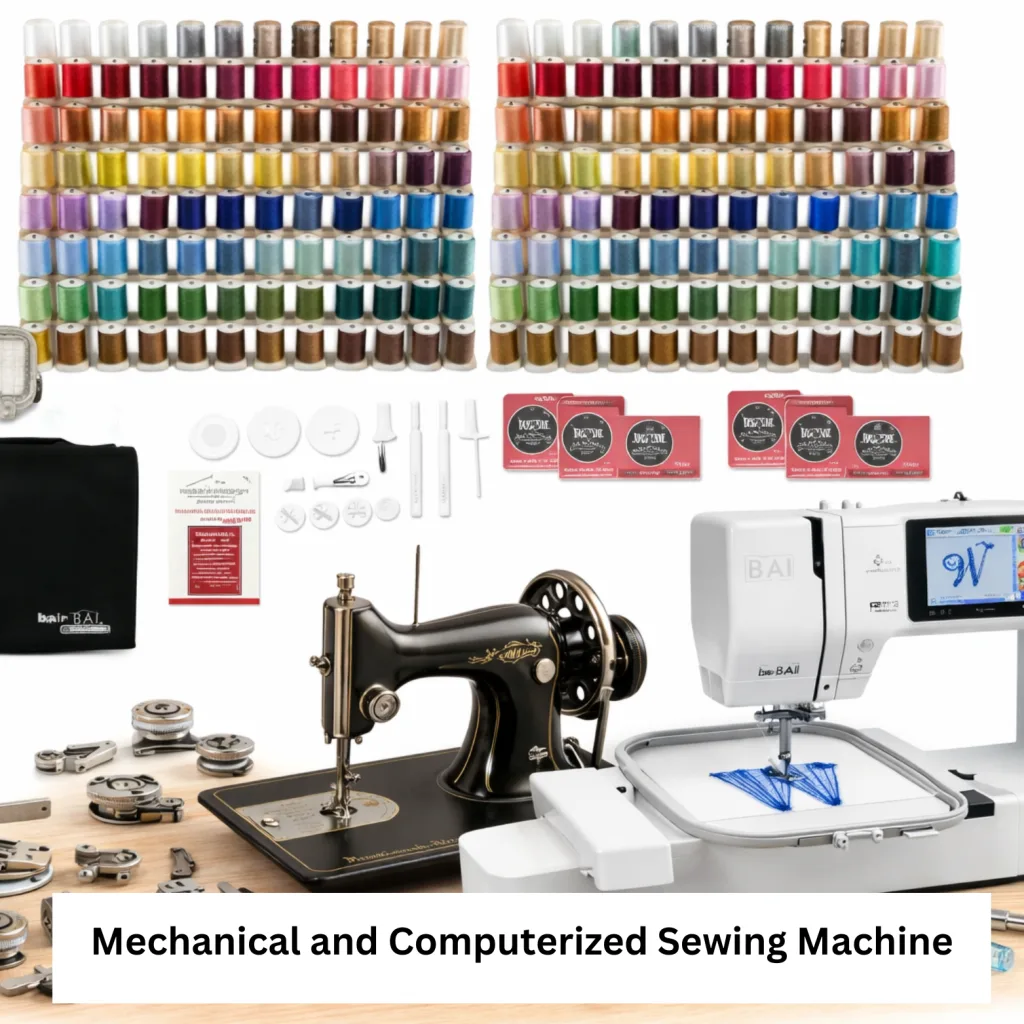
A mechanical sewing machine uses manual dials, knobs, or levers to control functions such as stitch selection, stitch length, and tension, while a computerized sewing machine uses electronic controls to manage many settings and may include features such as speed control, programmable stitches, needle positioning, and memory. Neither type is automatically better. Mechanical machines are a strong choice for sewists who prefer straightforward controls and basic sewing functions, while computerized models suit users who want more automation and a wider range of features. The right choice depends on your projects, sewing frequency, budget, and preferred level of control.
Quick Answer: Choose a mechanical sewing machine if simplicity, manual control, and essential stitching are your priorities. Choose a computerized sewing machine if you value automation, additional stitch options, electronic speed control, and convenience features. Machine quality and project requirements matter more than choosing one technology simply because it is newer or older.
Mechanical vs Computerized Sewing Machine: Key Differences
What Is a Mechanical Sewing Machine?
A mechanical sewing machine relies mainly on manual controls. The user typically adjusts stitch type, stitch length, stitch width, and other available settings with knobs, dials, or levers. These machines usually focus on essential sewing functions rather than extensive electronic automation. They can be a practical choice for alterations, repairs, garment sewing, and general home projects when the sewist prefers direct, hands-on control.
What Is a Computerized Sewing Machine?
A computerized sewing machine uses electronic controls to manage stitch selection and other machine functions. Depending on the model, features may include an LCD or touchscreen display, electronic speed control, automatic needle positioning, programmable stitch combinations, memory functions, and additional decorative stitches. The exact features vary significantly by model, so computerized does not automatically mean that every advanced function is included.
| Factor | Mechanical Sewing Machine | Computerized Sewing Machine |
|---|---|---|
| Controls | Manual dials, knobs or levers | Buttons, display or touchscreen |
| Stitch Selection | Usually focused on core stitches | Often offers more stitch choices |
| Automation | Limited | More automated functions |
| Speed Control | Depends on model | Electronic control common on many models |
| Learning Style | Hands-on and manual | Can provide more guided controls |
| Maintenance | Fewer electronic systems | May require electronic diagnosis for some issues |
| Best For | Straightforward general sewing | Feature-rich and varied sewing projects |
| Main Advantage | Simplicity | Convenience and flexibility |
What Should You Consider When Choosing Between Mechanical and Computerized Sewing Machines?
The best choice depends less on whether one machine type is universally better and more on how you actually plan to sew. Consider the type of projects you make, how frequently you use the machine, which features you genuinely need, your preferred learning style, and your overall budget.
Project type: Basic alterations, repairs, and straightforward construction may not require extensive electronic features. Decorative sewing, frequent stitch changes, or projects that benefit from programmable settings may make computerized controls more useful.
Sewing frequency: An occasional sewist may prefer a simpler setup, while someone sewing frequently may value features that reduce repetitive manual adjustments.
Automation: Decide whether features such as electronic speed control, needle positioning, automatic locking stitches, or stitch memory would actually improve your workflow.
Control preference: Some sewists enjoy adjusting settings manually. Others prefer selecting settings through buttons or a digital interface.
Budget and features: Compare what each individual model offers rather than buying solely because it is labelled mechanical or computerized. A well-built machine with the right features is more useful than paying for functions you rarely need.
Which Is Easier to Use: Mechanical or Computerized?
Ease of use depends on the sewist as much as the machine. Mechanical machines often have fewer controls to learn, which can make the interface feel straightforward. However, the user may need to make more adjustments manually.
Computerized machines can initially appear more complex because of their displays and additional functions, but features such as electronic speed control, preset stitch settings, and needle-position controls can simplify certain sewing tasks. Beginners who prefer minimal controls may feel comfortable with a mechanical model, while beginners who appreciate automation may prefer a computerized machine.
Instead of assuming one type is always easier, choose a machine whose controls feel intuitive and whose features match the projects you want to learn.
Which Is Better for Beginners?
Both types can work well for beginners. A mechanical machine can help a new sewist focus on essential controls and basic stitching, while a computerized machine may provide convenience features that make speed and stitch selection easier to manage. Beginners should prioritize clear controls, reliable stitch quality, appropriate speed, and features they will actually use. For model-specific options, see our best sewing machines for beginners guide.
Maintenance and Durability: Does Machine Type Matter?
Mechanical machines generally contain fewer electronic control systems, which can make some mechanical issues easier to diagnose. Computerized models include electronic components in addition to their mechanical systems, so certain faults may require specialized diagnosis or repair.
However, machine type alone does not determine durability. Build quality, frequency of use, correct threading, cleaning, lubrication requirements, needle selection, storage, and regular servicing can have a greater effect on long-term performance.
A high-quality computerized machine can provide many years of reliable use, just as a poorly maintained mechanical machine can develop problems. Compare the construction and service requirements of the specific models you are considering rather than assuming that one entire category will always last longer.
Mechanical vs Computerized Sewing Machine: Cost and Value
Mechanical machines often have a lower entry price because they generally include fewer electronic functions, while computerized machines can become more expensive as additional automation, stitch options, displays, memory, and specialized features are added.
Price alone should not decide the purchase. If you are searching for the best sewing machine for beginners under $300, compare the features you will realistically use, the projects the machine can handle, available accessories, serviceability, and overall build quality.
A lower-cost machine is not necessarily better value if it lacks an important feature, while an expensive computerized model may offer little benefit if most of its functions remain unused.
For budget-conscious beginners, start by identifying the essential features you need before comparing specific models within your budget.
Which Type of Sewing Machine Is Better for Different Projects?
| Sewing Need | Better Starting Point | Why |
|---|---|---|
| Basic alterations and repairs | Mechanical | Essential controls may be sufficient |
| General home sewing | Either | Depends on desired features |
| Decorative stitching | Computerized | More stitch options are common |
| Frequent sewing | Computerized may help | Automation can reduce repetitive adjustments |
| Occasional simple projects | Mechanical may be enough | Fewer advanced functions needed |
| Quilting | Depends on model | Workspace, feed, stitch control and accessories matter |
| Thick fabrics | Depends on model | Motor, feed system, needle compatibility and construction matter more than control type |
| Embroidery | Embroidery-capable machine | Requires appropriate embroidery functions |
Machine control type is only one part of choosing the right equipment. For denim, canvas, upholstery, and other dense materials, see our sewing machine for heavy fabrics guide. If decorative designs and automated stitching are your priority, compare options in our embroidery sewing machine for beginners guide.
Mechanical or Computerized Sewing Machine: Which Should You Buy?
Choose a mechanical sewing machine if you primarily want straightforward controls, essential stitches, hands-on adjustments, and a simple general-sewing setup.
Choose a computerized sewing machine if electronic speed control, additional stitch choices, programmable settings, automation, or convenience features would make your projects easier.
There is no universal winner in the mechanical vs computerized sewing machine comparison. The better machine is the one whose build quality, controls, features, and sewing capabilities match the projects you actually plan to complete.
Frequently Asked Questions
Is a computerized sewing machine better than a mechanical sewing machine?
Not automatically. Computerized machines generally provide more automation and feature options, while mechanical machines emphasize straightforward manual controls. The better option depends on the user and project requirements.
What is the main difference between mechanical and computerized sewing machines?
The main difference is how the machine is controlled. Mechanical models primarily use manual dials, knobs, and levers, while computerized machines use electronic controls and may automate several sewing functions.
Are computerized sewing machines good for beginners?
Yes. Many beginners benefit from electronic speed control and preset stitch settings. However, a beginner who prefers fewer controls may feel more comfortable using a mechanical machine.
Are mechanical sewing machines easier to maintain?
They may be mechanically simpler because they contain fewer electronic control systems, but maintenance requirements still depend on the individual model and how it is used.
Do mechanical sewing machines last longer than computerized machines?
Not necessarily. Build quality, maintenance, sewing frequency, storage, and correct use have a major influence on machine lifespan.
Which sewing machine is better for thick fabrics?
Choose based on motor performance, feed system, presser-foot clearance, needle compatibility, and machine construction rather than choosing solely between mechanical and computerized controls.
What should I consider when choosing between mechanical and computerized sewing machines?
Consider your project types, sewing frequency, budget, stitch requirements, preferred controls, desired automation, and the features included with each specific model.
