

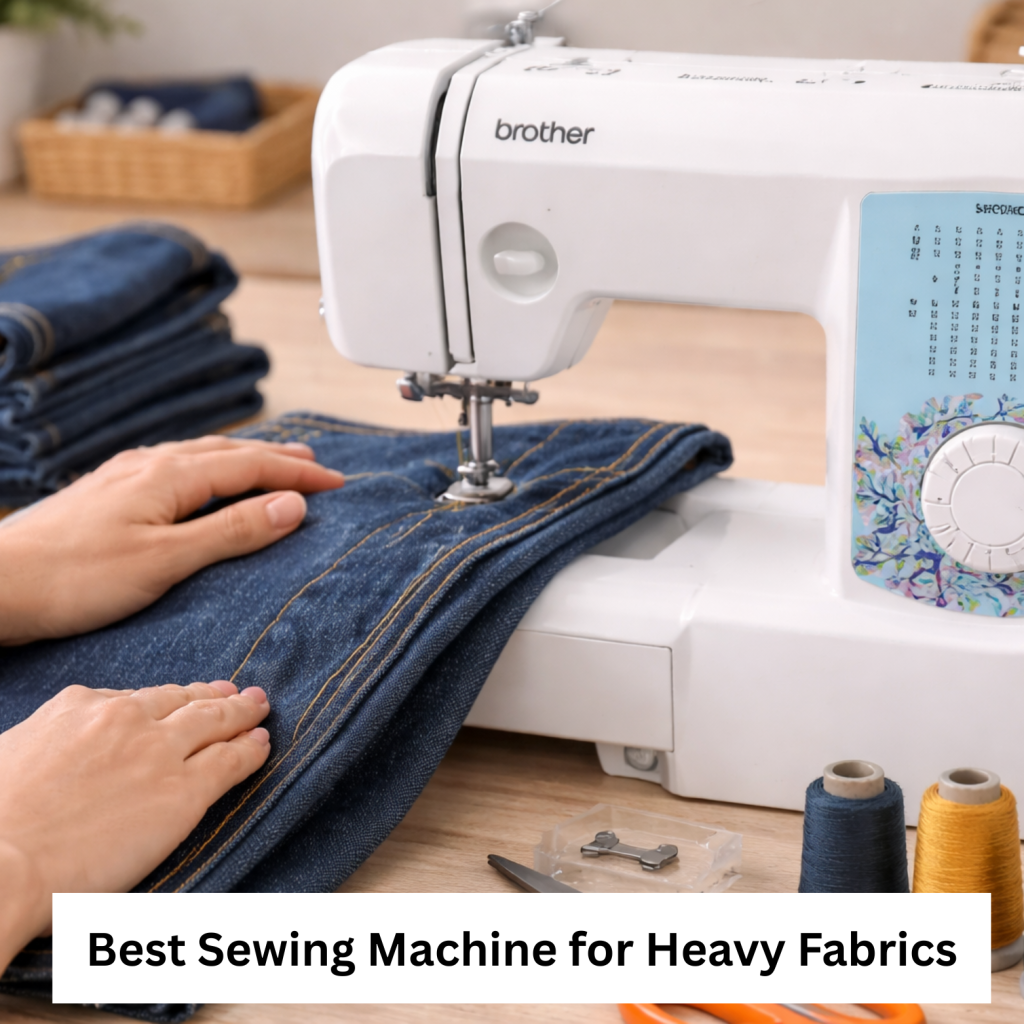
Heavy fabrics such as denim, canvas, upholstery fabric, and layered seams place more demand on a sewing machine than lightweight materials. The best sewing machine for heavy fabrics should provide stable fabric feeding, enough presser-foot clearance, compatibility with heavy-duty needles, and reliable power to sew through multiple layers without frequent skipped stitches or uneven seams.
For occasional denim hems, canvas projects, and other thick household fabrics, a well-built heavy-duty domestic sewing machine may be enough. For frequent leather, upholstery, or very dense multi-layer work, a semi-industrial or industrial machine may be more suitable. The right choice depends on fabric thickness, how often you sew heavy materials, the stitches you need, and the type of projects you plan to make.
Quick Answer:For most home sewing, look for a heavy-duty sewing machine with a strong feed system, good presser-foot clearance, adjustable settings, and support for heavy-duty needles. Consider a semi-industrial or industrial machine when you regularly sew very thick leather, upholstery, or multiple dense layers.
What to Look for in a Sewing Machine for Heavy Fabrics
A sewing machine for heavy fabrics needs more than basic stitch options. Thick materials and multiple fabric layers require consistent feeding, enough space under the presser foot, suitable needle compatibility, and stable construction so the machine can maintain even stitches as fabric thickness changes.
Important features to look for:
- Strong and consistent feed system: Helps move denim, canvas, upholstery fabric, and layered seams evenly under the presser foot.
- High presser-foot clearance: Provides additional room when positioning thicker fabric layers beneath the foot.
- Adjustable presser-foot pressure: Helps improve fabric control when switching between lighter materials and dense layers.
- Heavy-duty needle compatibility: Allows the machine to use needles designed for materials such as denim and other thick fabrics.
- Adjustable stitch length and width: Gives more control for different seams, topstitching, and project requirements.
- Stable construction: A solid machine body can help reduce unwanted movement when sewing bulky projects.
The best choice is not simply the machine marketed as the most powerful. Match these features to the fabrics you sew most often and the number of layers the machine will regularly need to handle.
Match the Machine to Your Heavy-Fabric Projects
The right sewing machine depends on the material, number of layers, stitch type, and how frequently you work with heavy fabrics. A machine that performs well for occasional denim hems may not be the best choice for frequent upholstery, leather, or multi-layer canvas projects.
Before choosing a machine, consider:
- Denim and jeans: Look for reliable feeding, suitable denim needle compatibility, and enough presser-foot clearance for thick seams.
- Canvas and bags: Prioritize stable feeding and consistent stitch formation through multiple layers.
- Upholstery fabrics: Heavier or frequent upholstery work may require a more robust machine with better control over bulky materials.
- Leather: Machine suitability depends heavily on leather thickness, number of layers, needle type, thread, and feed system.
- Occasional home projects: A capable heavy-duty domestic sewing machine may be sufficient.
- Frequent dense-material sewing: A semi-industrial or industrial machine may be worth considering when the workload exceeds what a domestic model is designed to handle.
Choose the machine based on your actual projects rather than relying only on labels such as “heavy duty.” Fabric handling, feeding, clearance, needle compatibility, and required stitch types are more useful comparison points.
How to Test a Sewing Machine for Thick Fabrics
Whenever possible, evaluate a machine using fabric similar to the material you plan to sew. A machine may perform well on a single layer of cotton but behave differently when crossing a bulky denim seam, several layers of canvas, or other dense materials.
When comparing machines, check:
- Stitch consistency: Look for even stitches without frequent skipping when fabric thickness changes.
- Fabric feeding: Make sure multiple layers move smoothly without excessive slipping or bunching.
- Presser-foot clearance: Check whether bulky seams and stacked layers fit comfortably beneath the foot.
- Speed control: Confirm that you can sew slowly and accurately through difficult areas.
- Machine stability: Excessive movement or vibration can make precise sewing more difficult.
- Needle and thread compatibility: Verify that the machine supports the needle and thread types recommended for your intended fabrics.
If you cannot test a machine in person, compare its documented specifications and supported needle, presser-foot, and fabric-handling features before deciding.
Choose Features That Support Future Projects
Your sewing needs may change as you begin working with thicker fabrics, larger projects, or more advanced techniques. Choosing a machine with useful adjustment options can give you more flexibility without forcing you to replace the machine as soon as your projects become more demanding.
Features worth considering include:
- Compatible presser feet: Walking feet, roller feet, and other specialty feet can improve fabric control for certain projects.
- Adjustable stitch length and width: Provides more flexibility for construction seams, topstitching, and decorative work.
- Multiple needle positions: Useful when adjusting seam allowances or positioning topstitching.
- Free-arm capability: Helpful for sewing cuffs, pant legs, and other narrow areas.
- Extension table compatibility: Can provide additional support for larger or bulky projects.
- Adjustable presser-foot pressure: Offers more control when moving between different fabric weights and layer thicknesses.
Prioritize features you are likely to use rather than choosing a machine only because it has the longest feature list. A machine that matches both your current projects and likely future needs can provide better long-term flexibility.
Check Support, Compatibility, and Ownership Needs
The machine itself is only one part of the buying decision. Before purchasing a sewing machine for heavy fabrics, also check whether the model has the accessories, adjustments, and support options you are likely to need over time.
Before choosing a machine, review:
- Needle compatibility: Confirm that the machine supports appropriate needle types and sizes for the fabrics you plan to sew.
- Presser-foot compatibility: Check whether useful feet such as walking, roller, or specialty feet are available for that model.
- Replacement parts: Make sure commonly replaced items such as bobbins, needles, belts, and presser feet are reasonably accessible.
- Warranty terms: Review the manufacturer or seller warranty before purchase.
- Service options: Consider whether repair or maintenance support is available if the machine needs professional attention.
- Manuals and setup guidance: Clear instructions can make it easier to use the machine correctly with different fabric weights.
- Return policy: Check the seller’s return conditions in case the machine does not suit your intended projects.
Brand reputation can be useful, but it should not replace checking the specifications and fabric-handling features of the exact model you are considering.
Heavy-Duty Domestic vs Semi-Industrial vs Industrial Sewing Machines
The best machine type depends on how often you sew heavy fabrics, how dense the materials are, and whether you need general-purpose stitches or more specialized performance.
| Machine Type | Best Suited For | Typical Projects | Main Advantage | Consider Before Buying |
|---|---|---|---|---|
| Heavy-Duty Domestic | Home sewists who occasionally or regularly work with thicker materials | Denim hems, canvas projects, bags, layered household fabrics | Good balance of versatility and heavy-fabric capability | May not be ideal for continuous work on very dense or bulky materials |
| Semi-Industrial | Sewists who frequently handle heavier projects and want more focused fabric-handling performance | Multiple denim layers, canvas, heavier garments, and selected upholstery work depending on the model | Can provide more robust performance for demanding projects | The term “semi-industrial” varies between manufacturers, so compare the exact machine specifications |
| Industrial | Frequent, specialized, or production-level sewing | Upholstery, leather, heavy canvas, and other demanding materials when matched to the correct machine type | Designed for specialized and repetitive sewing tasks | Industrial machines are often designed for specific stitch types or materials rather than general-purpose sewing |
For most home users, a heavy-duty domestic machine is the practical starting point. Move toward a semi-industrial or industrial option when your workload, fabric density, or project requirements consistently exceed what a domestic machine can comfortably handle.
Frequently Asked Questions About Sewing Machines for Heavy Fabrics
What sewing machine is best for heavy fabrics?
The best sewing machine for heavy fabrics depends on the materials and projects you sew most often. For home projects involving denim, canvas, bags, and layered fabrics, a capable heavy-duty domestic machine may be enough. Frequent upholstery, leather, or very dense multi-layer work may require a semi-industrial or industrial machine designed for more demanding use.
Can a regular sewing machine sew thick fabric?
Some regular sewing machines can handle occasional thick fabric if the material, number of layers, needle, thread, presser foot, and machine settings are appropriate. However, repeatedly sewing dense seams or bulky layers may be better suited to a machine with stronger fabric feeding, better clearance, and heavy-duty needle compatibility.
What features are important for sewing denim and canvas?
Look for consistent fabric feeding, good presser-foot clearance, compatible heavy-duty or denim needles, adjustable stitch settings, and stable machine construction. These features help when sewing multiple layers or crossing bulky seams.
Do I need a heavy-duty or industrial sewing machine?
A heavy-duty domestic machine is often sufficient for occasional or regular home sewing with denim, canvas, and other thick fabrics. An industrial machine becomes more relevant when you frequently sew very dense materials, specialized projects, or repetitive workloads that exceed the intended use of a domestic model.
What needle should I use for thick fabric?
Use a needle type and size that matches the specific fabric, thread, and sewing machine. Denim and other heavy materials generally require needles designed for thicker fabrics, but always check the machine and needle manufacturer recommendations before selecting a needle.
Is a heavy-duty domestic sewing machine enough for upholstery?
It depends on the upholstery fabric, number of layers, thread, and construction of the project. A heavy-duty domestic machine may handle some lighter upholstery work, while dense upholstery, thick seams, or frequent production work may require a more specialized semi-industrial or industrial machine.
Final Thoughts
The best sewing machine for heavy fabrics is the one that matches the materials, layer thickness, stitch requirements, and frequency of your projects. For occasional denim, canvas, and other thick household fabrics, a capable heavy-duty domestic machine may provide enough flexibility. More demanding upholstery, leather, or repeated multi-layer work may justify considering a semi-industrial or industrial option.
Focus on practical factors such as fabric feeding, presser-foot clearance, needle compatibility, stitch control, machine stability, and available accessories. Comparing these features against the projects you actually plan to sew will help you choose a machine that handles heavy fabrics more consistently and suits your long-term sewing needs.
