

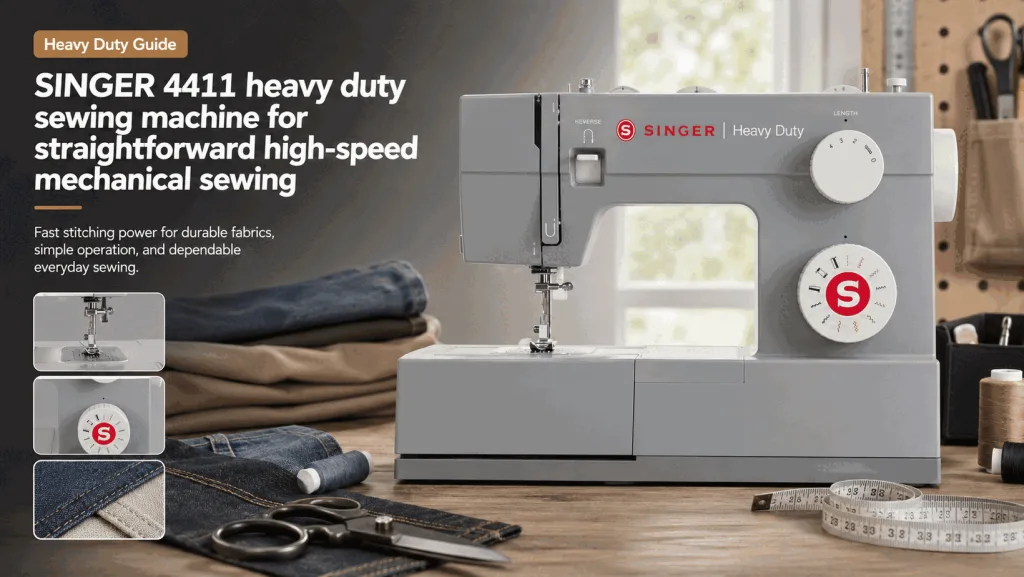
The SINGER 4411 heavy duty sewing machine is aimed at sewists who prefer direct mechanical controls, useful utility stitches, and faster straight-seam work without a large menu of computerized functions. The machine can be attractive for denim hems, canvas-style projects, home décor, repairs, and repetitive seams, but “heavy duty” does not remove the need for correct needles, sensible layer thickness, controlled starts, and balanced feeding. The best results come from understanding when speed helps and when a thick seam requires slower, deliberate control.
How To Evaluate The SINGER 4411 Heavy Duty Sewing Machine
Mechanical controls are useful when you want immediate visual feedback. Stitch selection, length, width where applicable, and reverse are adjusted directly rather than through layered menus. That simplicity can be a benefit for users who repeat a narrow range of garment, repair, and home décor tasks.
Speed matters most on long stable seams. On a straight curtain panel or multiple consistent fabric pieces, a faster machine can save time. At a crossed jeans hem, zipper stop, thick webbing join, or abrupt change in layers, the better strategy is to reduce speed and maintain needle alignment.
Features And Setup That Matter In Real Use
Set Mechanical Controls Before The Fabric Goes Under The Foot
Choose the stitch and test length on scrap first. Mechanical dials make it easy to see the current setting, but they do not guarantee that the selected length suits the actual fabric stack. A short test seam prevents rework on the project.
Use Speed Where The Seam Is Stable
High-speed stitching is useful on long, predictable runs after tension, needle, and feeding are confirmed. Increase speed gradually instead of pressing the pedal fully from the first stitch. The goal is repeatable productivity, not simply reaching the machine’s maximum rate.
Prepare Thick Transitions Before Sewing
Grade seam allowances, use a leveling tool when appropriate, and hand-turn the first penetration if the ridge is severe. The machine should not be asked to climb a sudden bulky step while the fabric is being pulled from behind.
Keep The Bobbin Area And Feed Path Clean
Lint accumulation can affect feeding and stitch formation. Follow the manual for bobbin-area cleaning, remove lint with the recommended tools, and inspect the needle regularly. A fresh needle is a simple maintenance step that prevents many skipped-stitch and fabric-damage problems.
Build A Workflow Around The Project, Not The Marketing Label
The SINGER 4411 mechanical controls are useful for sewists who want a direct relationship between the dial and the stitch. Before production sewing, make one labeled scrap showing the settings that work for your common fabric so returning to a reliable setup takes seconds.
Use 4411 high speed stitching after the seam has proven stable at a moderate pace. SINGER’s official product information lists an extra-high sewing speed for the 4411; save that capability for long controlled seams and reduce speed before thick intersections or precise corners.
Think of SINGER 4411 utility stitches as a focused toolkit. Straight stitching, zigzag, buttonhole work, and selected utility applications cover many repair and construction jobs. More stitch choices are not automatically better if the machine’s core stitches already match your regular projects.
For 4411 thick fabric sewing, match the needle and thread to the material, then test the exact number of layers you will cross. Flat layers may sew easily while a folded seam junction creates much more resistance. The test should include that thickest point.
A careful 4411 beginner heavy duty setup starts with threading, bobbin insertion, needle installation, presser-foot position, and a medium-speed sample. Learning those basics on stable woven fabric makes it easier to recognize when a later problem comes from fabric thickness rather than setup.
Build a simple SINGER 4411 maintenance routine around lint removal, needle inspection, bobbin-area checks, and the maintenance steps in the manual. Replacing a damaged needle early is inexpensive protection against skipped stitches, shredded thread, and unnecessary stress on the fabric.
Test The 4411 On Your Thickest Real Seam
- Thread the machine correctly and install a fresh needle suited to the fabric.
- Create a sample with flat layers and one bulky seam crossing that matches the project.
- Sew at moderate speed first and inspect both sides.
- Increase speed only on the flat portion after stitch formation is stable.
- Slow down before the bulky ridge and keep the presser foot level when appropriate.
- Record the stitch length, needle, thread, and settings that produced the cleanest sample.
Where Speed Helps And Where Control Matters More
| Situation | Best Approach | Reason |
|---|---|---|
| Long straight home décor seam | Increase speed gradually | Stable feeding path |
| Denim side-seam crossing | Slow controlled stitching | Needle deflection risk |
| Basic repair seam | Moderate speed | Accuracy matters |
| Repetitive fabric pieces | Higher speed after testing | Consistent layers |
| Tight corner | Slow and pivot carefully | Precise placement |
Common Mistakes That Reduce Results
- Using maximum speed on every seam
- Pulling thick fabric from behind
- Assuming any needle can handle denim or canvas
- Skipping sample tests at bulky intersections
- Ignoring lint and needle wear
A heavy-duty label describes capability, not immunity from poor setup. Most durable results come from matching needle, thread, fabric, feeding, and speed rather than relying on motor power alone.
Check Manufacturer Guidance Before Final Setup
SINGER’s official Heavy Duty 4411 product page lists the current feature set, speed information, included accessories, and manufacturer guidance. Use the manual linked by the manufacturer as the final reference for operation and maintenance.
Use The SINGER 4411 Heavy Duty Sewing Machine For Simple Controlled Productivity
The SINGER 4411 heavy duty sewing machine suits users who value mechanical simplicity and want to move efficiently through sturdy, repeatable projects. Its speed is most useful after the stitch, needle, and feed setup are already correct.
Build a small library of labeled samples for denim, canvas-style fabric, home décor, and ordinary repairs. That turns mechanical controls into a strength because proven settings are easy to reproduce, and it helps the SINGER 4411 heavy duty sewing machine stay predictable across different tasks.
Frequently Asked Questions
How fast can the SINGER 4411 sew?
SINGER currently lists the 4411 at up to 1,100 stitches per minute. Real project speed should be reduced for bulky seams, corners, and precise work.
Can the SINGER 4411 sew denim?
It is designed for sturdy fabrics, but use the correct denim needle, reasonable layer thickness, and a controlled approach at crossed seams.
Is the 4411 computerized?
No. It is a mechanical sewing machine with direct controls rather than a computerized stitch-selection interface.
Does a heavy-duty machine need special maintenance?
Follow the exact manual. Routine lint removal, correct needles, and bobbin-area care remain important.
Is maximum speed best for beginners?
No. Beginners usually gain better control by starting at a moderate pace and increasing speed only after they can guide the seam consistently.
