

Choosing the right sewing machine needles can prevent skipped stitches, puckering, broken thread, and fabric damage. The best choice depends on fabric structure, thickness, thread weight, stitch type, and the needle system accepted by your machine.
A needle that works well on woven cotton may perform poorly on stretch knit or dense denim. This guide explains size numbers, common point styles, compatibility checks, safe replacement, troubleshooting, storage, and what buyers should verify before ordering.
How Sewing Machine Needles Are Sized
Most household needles show two size numbers, such as 80/12 or 90/14. The larger European number and smaller American number describe the same needle diameter. A lower number generally suits lighter fabric, while a higher number is intended for thicker or denser material.
Use this needle size chart as a practical starting point, not as a substitute for the machine manual, needle package, or a test seam.
| Needle size | Common starting use | What to verify |
| 60/8 to 70/10 | Sheer and lightweight fabric | Fine thread, gentle tension, and a small test seam |
| 75/11 to 80/12 | Lightweight cotton, lining, and many everyday fabrics | Fabric weave and thread thickness |
| 90/14 | Medium-weight woven fabric | Seam layers and finish quality |
| 100/16 | Denim, canvas, and heavier fabric | Correct needle type, motor load, and presser-foot clearance |
| 110/18 | Very heavy layers on compatible machines | Machine capacity and manufacturer guidance |
Do not choose size by fabric name alone. A lightweight denim shirt and a multi-layer jeans hem can require different sizes. Always test on a scrap that matches the final number of layers.
Sewing Needle Types and Their Best Uses
Universal needle
A universal needle is a practical general-purpose choice for many woven fabrics and some stable knits. It is useful for routine repairs, cotton projects, and mixed sewing, but it may not be the best option for highly elastic fabric or very dense seams.
Denim needle
A denim needle is designed for firm woven material and layered seams. Use the smallest size that forms clean stitches without bending or struggling. Slow down over bulky intersections, and do not pull the fabric from behind because that can deflect the needle.
Ballpoint needle
A ballpoint needle moves between knit loops instead of cutting directly through them. It is often a better starting point for jersey, interlock, and other knitted fabrics that show holes or runs with a sharper point.
Stretch needle
A stretch needle is made for highly elastic fabrics where skipped stitches may occur. It can be useful for swimwear fabric, elastic knits, and materials containing a high percentage of stretch fiber. Verify the recommended needle system and size before buying.
Quilting and embroidery needles
Quilting needles are designed to pass through layered fabric and batting, while embroidery needles commonly have an eye and scarf suited to decorative thread movement. Match the needle to the project, thread, stabilizer, and machine speed rather than relying on the label alone.
Fabric Needle Guide for Common Projects
For woven cotton, begin with a universal needle in a moderate size and adjust after testing. For knits, start with ballpoint or stretch depending on elasticity. For denim and canvas, use a denim needle and reduce speed at thick crossings. For embroidery, follow the thread and stabilizer recommendations and inspect the needle regularly for wear.
For parallel hems, a double-needle sewing machine setup can be useful, but confirm the machine supports twin-needle sewing and the correct needle spacing.
If you are comparing an adjustable-needle sewing machine, verify the available needle positions, throat-plate clearance, presser-foot opening, and twin-needle limitations before buying.
Compatibility Checks Before Buying
Needles that look similar are not always interchangeable. Check the machine manual for the required needle system, shank shape, maximum size, and any limits for twin needles or specialty needles. Household machines commonly use a flat-sided shank system, while some industrial and specialty machines require different systems.
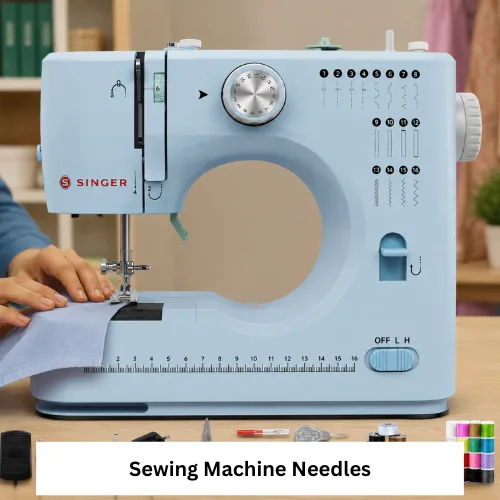
A Singer 2277 sewing machine may simplify setup with an automatic needle-threading feature, but buyers should verify the listed configuration before buying.
When shopping for sewing machine parts and accessories, confirm that the needle package lists your machine type or the exact needle system recommended by the manufacturer.
Also verify whether a listing is for a full assortment or a single size. Mixed packs are useful for varied projects, while dedicated packs reduce confusion in repeat production work.
Safe Needle Replacement and Setup
Turn the machine off and disconnect power before reaching near the needle area. Raise the needle to its highest position, lower or remove the presser foot as directed by the manual, and support the old needle while loosening the clamp screw.
Insert the new needle in the correct orientation and push it fully into the clamp before tightening. The flat side may face a specific direction depending on the machine, so verify the manual rather than guessing. Turn the handwheel slowly through one full cycle before sewing to confirm that the needle clears the presser foot, throat plate, and bobbin area.
A compact needle and thread kit can help with basic repairs, but verify that its needles are machine-compatible rather than hand-sewing needles.
Replace sewing machine needles after noticeable wear, a needle strike, repeated skipped stitches, or any bending. A damaged needle can mark fabric, shred thread, or hit internal parts.
Troubleshooting Common Needle Problems
Skipped stitches
Confirm the needle is fully inserted and facing the correct direction. Then check whether the point type matches the fabric. A stretch fabric may need a stretch needle rather than a universal option.
Thread shredding or breaking
Inspect the eye for damage, reduce excessive upper tension, rethread the machine, and confirm the thread is not too thick for the needle eye. A larger needle is not always the answer; the thread, fabric, and needle must work together.
Needle bending or breaking
Stop sewing immediately. Check for pulling on the fabric, incorrect insertion, a loose presser foot, wrong needle position, a bent needle, or impact with the throat plate. Remove broken pieces safely and inspect the bobbin area before restarting.
Puckering or visible holes
Try a smaller size, a different point type, lighter thread, or adjusted tension. Test on scrap fabric because some delicate materials retain permanent needle holes.
Maintenance, Storage, and Common Buying Mistakes
Store unused needles in labeled packs so size and type remain clear. Keep them dry and discard bent, burred, or rusty needles. Do not mix used and new needles in the same compartment unless they are clearly marked.
Common mistakes include buying by size without checking type, assuming every household needle fits every machine, using a denim needle for all heavy materials, and continuing to sew after a needle strike. Another mistake is ordering a large assortment without checking how many useful sizes it contains.
For business use, keep a small replacement stock for the fabrics sewn most often. Record the needle type, size, thread, tension range, and fabric result for repeatable production.
Conclusion
The best sewing machine needles are the ones that match the machine, fabric construction, thread, and seam thickness. Start with the fabric needle guide, test on matching scraps, install the needle safely, and replace it when stitch quality changes. American sewing machine can also help buyers compare relevant machines, tools, and accessories without forcing a one-size-fits-all choice.
FAQ
What needle size is best for everyday cotton?
An 80/12 universal needle is a common starting point, but test the actual fabric, thread, and seam layers before sewing the final project.
Can I use a universal needle on knit fabric?
Sometimes, but ballpoint or stretch needles are often better when a universal needle causes skipped stitches, holes, or fabric damage.
Why does my needle keep breaking?
Common causes include pulling fabric, incorrect insertion, a bent needle, wrong needle position, or hitting the presser foot or throat plate.
How do I know whether a needle fits my machine?
Check the machine manual for the needle system, shank style, permitted sizes, and specialty-needle limits.
Should I replace a needle after hitting a pin?
Yes. Stop the machine, switch off power, replace the needle, and inspect the stitch plate and bobbin area for damage or fragments.
