

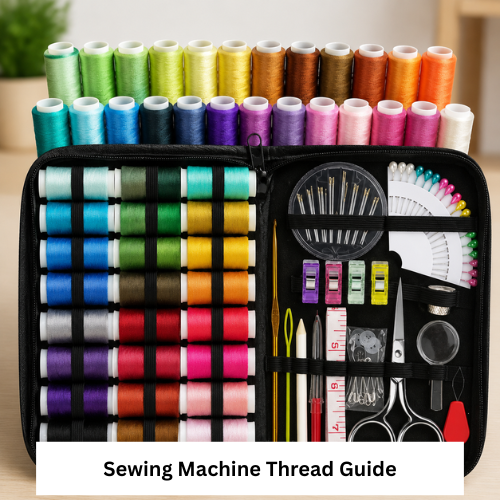
Choosing the right sewing machine thread affects seam strength, stitch appearance, tension balance, lint buildup, and how smoothly fabric feeds. Buyers should match thread fiber and thickness to the fabric, needle eye, stitch type, machine, and intended use instead of choosing only by color.
A reliable thread can still stitch poorly when it is too thick for the needle, old or damaged, wound unevenly, or routed through the machine incorrectly. This sewing thread guide explains common thread types, compatibility, setup, tension, troubleshooting, care, and practical buying checks.
How to Choose Sewing Machine Thread
Start with the project rather than the spool label. Garment seams need flexibility and dependable strength, quilting may require low-lint thread and consistent piecing, and embroidery needs smooth delivery at repeated stitch changes. Decorative topstitching may require a larger needle and different tension than ordinary construction seams.
Check the machine manual for thread guidance, then compare the spool diameter, winding quality, fiber, weight system, and recommended needle range. Thread-weight labels are not always presented in the same system, so compare manufacturer information carefully and verify before buying when the numbering is unclear.
| Thread type | Common uses | Advantages | Limitations and checks |
| Polyester thread | Garments, repairs, mixed fabrics, general sewing | Strong, slightly flexible, widely useful | Confirm thickness and heat requirements for the project |
| Cotton thread | Cotton garments, piecing, traditional quilting | Natural fiber and a soft finish | Can produce more lint; match strength to the seam |
| Embroidery thread | Machine embroidery and decorative stitching | Smooth sheen and broad color choice | Needs suitable needle, stabilizer, speed, and bobbin setup |
| Quilting thread | Piecing, machine quilting, and selected decorative work | Consistent stitching when matched correctly | Labels vary; verify fiber, weight, and intended use |
| Heavy topstitch thread | Visible seams and decorative topstitching | Bold stitch appearance | May require a larger eye, slower speed, and tension testing |
Polyester thread
Polyester thread is a practical choice for many home-sewing projects because it combines strength with some flexibility. It often suits garments, repairs, bags, and mixed-fiber fabrics. Avoid assuming every polyester spool has the same thickness or finish.
A multicolor thread kit may be useful for repairs and color matching, but buyers should verify fiber content, spool size, color range, and machine suitability before buying.
Cotton thread
Cotton thread can pair well with cotton fabric and many quilting projects. It may create more lint than some synthetic options, so clean the bobbin area regularly. For load-bearing or high-stress seams, confirm that the chosen thread has suitable strength and test the seam.
Embroidery thread
Embroidery thread is designed for decorative stitch coverage and smooth movement through repeated stitch paths. Pair it with an embroidery needle, suitable stabilizer, correct bobbin thread, and a test design.
A 160-spool embroidery thread set can provide broad color choice, but verify spool dimensions, fiber, colorfastness guidance, and compatibility with your thread stand before buying.
A 130-spool sewing thread set may suit users who need many colors, although the buyer should confirm whether the listing is intended for general sewing, embroidery, or another use.
Quilting thread
Quilting thread should be selected according to whether it is used for piecing, machine quilting, or decorative stitching. Fine, consistent thread can help accurate piecing, while visible quilting may use a different weight. Match the needle and tension to the exact spool rather than treating all quilting thread as interchangeable.
Match Thread Weight to Needle and Fabric
Thread should pass through the needle eye without scraping, shredding, or crowding. If the thread is too thick, it may fray, break, or create irregular stitches. If it is too fine for the needle and fabric, the seam may look weak or the needle holes may appear too large.
Use a fabric scrap with the same number of layers, interfacing, batting, or stabilizer as the final project. Sew straight and curved samples, then inspect both sides. A balanced stitch should lock within the material rather than pulling clearly to the top or underside.
A sewing kit with thread spools can be practical for basic repairs, but verify the thread fiber, length, condition, and machine suitability before using it for permanent seams.
Thread Setup for Clean Stitch Formation
Place the spool in the orientation recommended by the machine manufacturer. Use the correct spool cap or stand, follow every threading guide, raise the presser foot while threading when the manual requires it, and make sure the thread enters the tension path correctly.
Thread the needle in the stated direction. Confirm the needle is new, correctly inserted, and large enough for the thread. Wind the bobbin with the same care: even winding, correct direction, and no loose loops.
For machines with multiple thread paths, such as a 2/3/4-thread overlock serger, follow the exact threading order in the manual because changing the sequence can prevent proper stitch formation.
Before starting a valuable project, sew a test seam at the expected speed. Check stitch balance, seam stretch, fabric puckering, and whether the thread rubs against the spool edge or guide.
Troubleshooting Weak or Messy Stitches
Thread keeps breaking
Rethread the machine, replace a damaged needle, check the needle eye size, inspect the spool for snags, and reduce excessive tension. Old, brittle, or poorly stored thread may also break under normal sewing speed.
Thread nests under the fabric
Stop the machine and remove the fabric without forcing it. Check whether the presser foot was raised during threading, whether the take-up lever was threaded, and whether the bobbin was installed correctly.
Stitches look loose
Confirm both thread paths, clean lint from the tension and bobbin areas as directed, and test with compatible upper and bobbin threads. Do not compensate for incorrect threading by making extreme tension changes.
Fabric puckers
Try a finer needle and thread, reduce excessive tension, lengthen the stitch when appropriate, and use stabilizer for delicate or embroidered fabric. Always test first.
Thread sheds excessive lint
Clean the machine more often and compare another quality spool of the correct type. Lint level can vary with fiber, finish, and machine speed.
Thread Storage and Machine Maintenance
Store thread away from direct sunlight, high heat, moisture, dust, and crushing. Keep spool labels when they contain fiber and weight information. Avoid using visibly faded, fuzzy, brittle, or contaminated thread for important seams.
Clean lint from the bobbin and feed area according to the machine manual. Do not blow lint deeper into the machine. Use only manufacturer-approved lubrication where applicable, and disconnect power before cleaning near moving parts.
Use sewing machine thread from a consistent lot when color matching matters. For small-business production, record the brand, fiber, weight, color code, needle, tension, stitch length, and fabric used for approved samples.
Conclusion
The best sewing machine thread is not simply the strongest or thickest option. It is the thread that works with the fabric, needle, stitch, tension system, and finished use. Test before sewing, make small tension changes, store spools carefully, and replace damaged thread. American sewing machine offers relevant machines and supplies for buyers comparing practical sewing setups.
FAQ
Is polyester or cotton thread better for general sewing?
Polyester is often more flexible and widely useful, while cotton can suit cotton fabrics and quilting. Match the choice to the project and test the seam.
Why does my upper thread keep breaking?
Check threading, needle condition, needle-eye size, spool snags, and excessive tension. Replace old or damaged thread.
Can I use embroidery thread for regular seams?
It may form stitches, but decorative embroidery thread is not always the best choice for structural seams. Verify strength and intended use.
Should upper and bobbin thread be the same?
They can be, but some embroidery and specialty applications use different bobbin thread. Follow the project and machine guidance.
How can I fix thread nests under fabric?
Rethread with the presser foot raised when required, confirm the take-up lever is threaded, and reinstall the bobbin correctly.
