

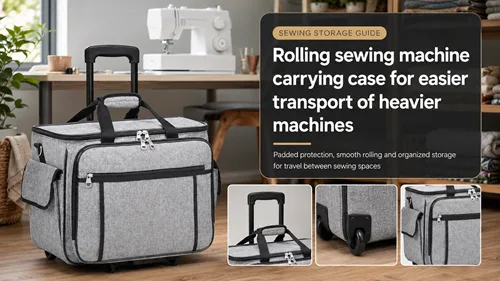
A rolling sewing machine carrying case can reduce strain when a heavier machine has to travel through parking lots, hotel corridors, retreat centers, or long classroom hallways. Wheels solve only part of the problem, though. The case still needs a stable base, a handle that does not flex excessively, enough internal support to control machine movement, and a shape that remains balanced when pockets are loaded. For retreat travel, the best case is the one that rolls predictably and still protects the machine when it has to be lifted.
How To Evaluate The Rolling Sewing Machine Carrying Case
Start with machine dimensions and real loaded weight. A larger case can seem safer, but excess interior room lets a heavy machine move when the case changes direction. Use padding or internal restraints as designed and avoid filling empty space with loose hard accessories that can become impact points.
Then inspect the travel route. Small wheels may be fine on smooth indoor floors but less comfortable on cracked pavement, deep carpet, or rough parking surfaces. A wide stable base and controlled handle reduce side-to-side tipping when the case changes direction.
Features And Setup That Matter In Real Use
Check Wheel Track And Base Stability
A heavier machine raises the center of mass. Wheels placed too close together can make the case feel unstable when turning. Load the case and make several slow turns; the body should follow the handle without leaning aggressively or trying to tip outward.
Test The Telescoping Handle Under Load
Extend the handle fully and pull the loaded case from different angles. Excessive flex, sticking sections, or a handle that feels too short can make a long retreat walk uncomfortable. The handle should also retract without pressing into the machine compartment.
Plan For Lifting Even With Wheels
You will still lift the case into a trunk, over a threshold, or up a short flight of steps. Check the fixed carry handles and where your hands land. The load should stay close to your body and the machine should remain upright inside the case during the lift.
Keep Accessories From Changing The Balance
Thread boxes, rulers, irons, extension tables, and project supplies can add surprising weight. Distribute them rather than loading every dense item into one outer pocket. A balanced case rolls straighter and puts less stress on zippers and seams.
Build A Workflow Around The Project, Not The Marketing Label
A wheeled machine travel case should be tested while fully loaded. Roll it forward, turn tightly, stop on a slight incline, and lift it by the fixed handles. These simple tests reveal stability problems that are difficult to notice when the case is empty.
Evaluate rolling sewing tote capacity by usable volume and weight distribution, not by pocket count. A case may hold many accessories but become unpleasant to pull if the outer pockets move too much weight away from the wheel base.
A heavy machine transport solution should protect the base of the machine and control side movement. If the machine can slide several inches inside the case, correct the fit before adding more accessories or taking the setup on a long retreat trip.
With a telescoping sewing case, inspect the handle connection points as carefully as the fabric. The handle takes repeated pulling force, and its position also affects how the case tracks around corners. A smooth extension mechanism is especially useful when moving between rooms frequently.
For padded rolling machine storage, padding should protect vulnerable sides without creating a soft unstable floor. The machine’s weight needs support beneath it, while the surrounding padding prevents contact with zippers, hard accessories, and external impacts.
As a sewing retreat luggage option, the rolling case should leave enough organization for project materials without becoming your only suitcase. Separate machine protection from general clothing or travel items so the sewing load stays balanced and the machine is not compressed by unrelated luggage.
Test The Case On A Retreat-Style Route
- Load the exact machine, pedal, cord, extension table if needed, and normal accessory kit.
- Roll the case over smooth floor, carpet, a threshold, and a short outdoor path when possible.
- Make tight turns and check whether the case tips or twists.
- Extend and retract the handle several times under realistic use.
- Lift the loaded case using the fixed handles and check machine movement inside.
- Repack after a mock sewing session to confirm the return trip is just as practical.
Rolling Case Features That Matter Under Load
| Feature | Why It Matters | Warning Sign |
|---|---|---|
| Wheel spacing | Controls side-to-side stability | Case tips in turns |
| Base support | Carries machine weight | Floor bows or sags |
| Telescoping handle | Reduces pulling strain | Flexes or sticks |
| Carry handles | Needed for stairs and vehicle loading | Poor grip position |
| Pocket layout | Controls weight balance | Heavy outer-side loading |
Common Mistakes That Reduce Results
- Choosing the largest case without checking machine movement
- Testing wheels only on smooth flooring
- Packing the extension table against the machine body
- Ignoring total loaded weight
- Assuming wheels eliminate the need for safe lifting
The right rolling case reduces strain without introducing new impact risks. If a case rolls well but lets the machine move, or protects the machine but becomes unstable when pockets are loaded, adjust the packing plan or choose a better-fitting option.
Check Manufacturer Guidance Before Final Setup
For broader machine-bag and accessory categories, see the SINGER accessories overview. Use it as a category reference only; the dimensions and transport requirements of your exact machine should determine the case you choose.
Choose A Rolling Sewing Machine Carrying Case For The Loaded Trip
A rolling sewing machine carrying case should be judged as a loaded transport system, not as an empty bag. Fit, base support, wheel stability, handle control, and weight distribution determine whether it actually makes a heavier machine easier to move.
Pack the case exactly as you would for a retreat and test the route before relying on it. When the machine stays controlled and the case remains easy to pull and lift, a rolling sewing machine carrying case can make frequent travel far more comfortable.
Frequently Asked Questions
Are four wheels always better than two for a sewing machine case?
Not automatically. Stability, wheel quality, base width, and the travel surface matter more than wheel count alone.
Can I pack an iron in the same rolling case?
Only if the case has safe capacity and the iron cannot press against the machine. Heavy accessories can change balance significantly.
How should a machine fit inside a rolling case?
It should have enough clearance for safe loading but should not slide freely from side to side during turns and lifting.
What matters most for sewing retreats?
Loaded weight, wheel stability, a reliable handle, protected accessory storage, and the ability to lift the case when wheels cannot be used.
Should I remove the spool pin before transport?
Follow the machine manual. If a part retracts or removes as designed, secure it according to manufacturer instructions rather than forcing it.
