

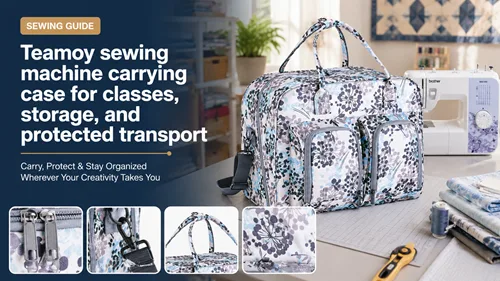
A Teamoy sewing machine carrying case can make weekly sewing classes much easier when the machine fits securely, the base is supported, and the accessories you actually need have a predictable place. The goal of a class bag is different from long-term storage: it has to handle repeated lifting, car loading, short walks, table setup, and packing again at the end of the session. That makes fit, padding, handles, zipper access, and pocket layout more important than simply choosing the case with the most compartments.
How To Evaluate The Teamoy Sewing Machine Carrying Case
Measure the machine yourself instead of relying only on a “fits most machines” statement. Include the handwheel, spool area, built-in handle, power socket area, and any protruding controls. Compare those dimensions with the usable internal space of the case, not just the exterior size.
Think about how far you carry the bag. A case that feels manageable from a closet to a car may become uncomfortable across a parking lot. Load the machine, power cord, pedal, project, and basic tools, then test the balance. Handles should meet comfortably without forcing you to tilt the bag.
Features And Setup That Matter In Real Use
Protect The Machine Base And Controls
The machine should sit on a supportive base so its weight is not concentrated on soft fabric alone. Padding should protect the handwheel, tension area, and other protruding controls from direct pressure when the case is set down or placed next to other bags.
Use Pockets By Frequency
Put the foot control, power cord, everyday feet, needles, and bobbins in easy-access compartments. Less-used rulers, extra thread, and backup tools can go in secondary pockets. Consistent packing prevents small parts from disappearing between class sessions.
Separate Sharp Tools From Soft Accessories
Scissors, seam rippers, pins, and needles should be closed or contained so they cannot damage the case lining, power cord, fabric project, or machine cover. A small rigid box inside one pocket is often better than dropping sharp tools loose into a large compartment.
Pack For The Return Trip
Leave a little free space for the project after class. Fabric may be folded differently, thread may be attached to a work-in-progress, and the machine may need to be packed quickly. A case that works only when everything is arranged perfectly can become frustrating at the end of a long session.
Build A Workflow Around The Project, Not The Marketing Label
A Teamoy padded machine bag should hold the machine close enough that it does not build momentum inside the case when lifted. Padding works best when the fit is controlled; excessive empty space can allow the machine to shift into the sidewall or zipper area.
For a sewing class transport case, test the full route from storage area to vehicle to classroom. Stairs, curbs, narrow doors, and long hallways can change whether a shoulder-style bag or a wheeled option is more practical for your weekly routine.
A consistent machine storage pocket layout saves time. Assign one pocket to power items, one to presser feet and bobbins, and one to hand tools. Returning each item to the same place also makes it easier to notice when something is missing before you leave class.
Good protective sewing tote design uses structure around the base and vulnerable sides without making access difficult. Look for a bag that opens wide enough to lower the machine in vertically rather than scraping controls against a narrow zipper opening.
Use Teamoy accessory compartments for small items that would otherwise move around the main cavity. Keep needles in packaging, bobbins in a small organizer, and presser feet in labeled slots so the compartments protect the accessories instead of simply hiding them.
For portable machine travel storage, remove anything that can swing, snag, or press against the machine during transport. Secure the cord and pedal, lower or protect spool pins when the manual allows, and avoid placing heavy rulers or irons directly against the machine body.
Pack The Case For A Real Class Day
- Measure the machine and compare it with the case’s usable interior dimensions.
- Load the machine first, then the pedal and power cord without pressing them against controls.
- Pack only the feet, needles, bobbins, and tools needed for the planned class project.
- Lift the fully loaded case and check whether the handles remain comfortable and balanced.
- Walk a realistic distance and note any shifting inside the bag.
- At home, unpack and inspect the machine and accessories for pressure marks or loose items.
What To Pack For Weekly Sewing Classes
| Item | Where To Pack It | Reason |
|---|---|---|
| Machine | Main padded cavity | Keep weight centered |
| Foot control and cord | Dedicated side pocket | Avoid pressure on controls |
| Bobbins and feet | Small organizer pocket | Prevent loss and impact |
| Scissors and seam ripper | Protected tool pouch | Keep sharp edges contained |
| Current project | Flat outer compartment | Avoid crushing fabric |
Common Mistakes That Reduce Results
- Choosing by exterior dimensions only
- Packing heavy tools against the machine body
- Letting cords move loose around controls
- Overloading every pocket because space is available
- Changing the pocket layout every class
A carrying case should make repeated transport more predictable. If packing takes too long or the machine shifts every time you lift the bag, reduce the accessory load or choose a more structured case rather than adding more padding around a poor fit.
Check Manufacturer Guidance Before Final Setup
For general accessory categories including machine bags, the SINGER accessories overview is a useful reference for the types of storage products available. Machine dimensions and transport precautions should still be confirmed against the manual for your exact model.
Make The Teamoy Sewing Machine Carrying Case Part Of Your Class Routine
The Teamoy sewing machine carrying case works best when it is packed the same way every week. A secure machine, protected power items, contained sharp tools, and organized feet and bobbins reduce setup time and lower the chance of leaving an important part at home.
Before making the case permanent, test it fully loaded on the route you actually travel. If the size, balance, and access still feel comfortable after a real class day, the Teamoy sewing machine carrying case is doing the job it was meant to do.
Frequently Asked Questions
How much extra space should a sewing machine case have?
Enough for safe insertion and light padding, but not so much that the machine can slide significantly during lifting and transport.
Should the foot pedal go in the main machine compartment?
A separate pocket is usually better because it prevents the pedal and cord from pressing against machine controls or scratching the body.
Can I store the machine in the carrying case between classes?
Yes if the case is dry, clean, ventilated appropriately, and the machine is not being compressed by other stored items.
What accessories should I bring to class?
Bring the items required for the planned project plus a small backup set of needles, bobbins, seam tools, and the correct power components.
How can I tell if the bag is overloaded?
If handles strain, the case tilts sharply, zippers are under tension, or heavy accessories press against the machine, reduce the load.
