

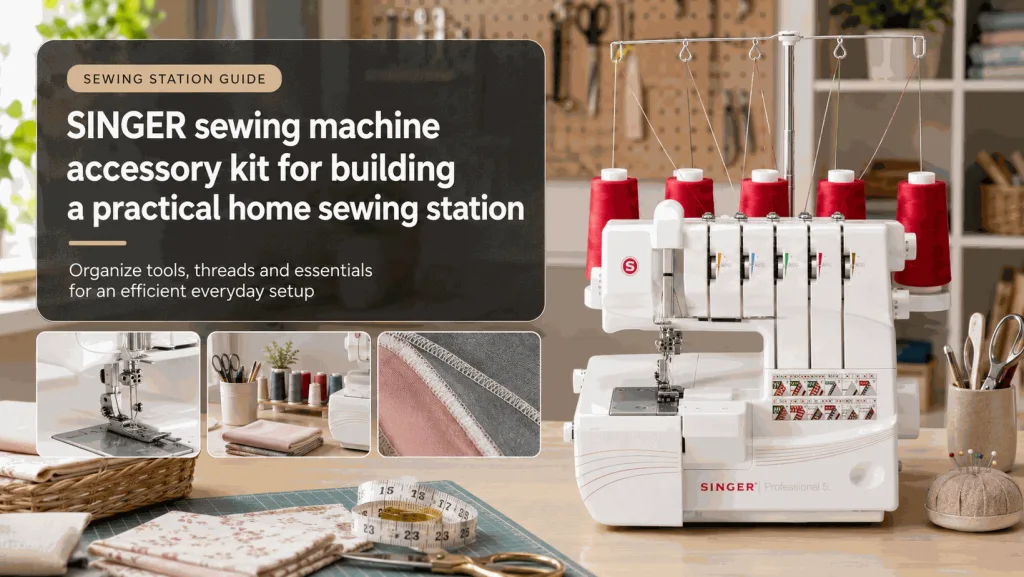
A SINGER sewing machine accessory kit is most valuable when it solves the jobs you actually do instead of filling a drawer with parts you never touch. A practical home sewing station needs compatible bobbins, the right needles, a few useful presser feet, measuring and cutting tools, basic maintenance supplies, and organized storage. The goal is not to own every attachment. The goal is to be able to sit down, prepare a project, change a worn needle, install the correct foot, and finish a repair without hunting through unrelated craft supplies.
How To Evaluate The SINGER Sewing Machine Accessory Kit
Start by checking the exact SINGER model number and manual. Presser-foot shank style, bobbin class, needle system, and supported attachments matter more than the number of pieces printed on a kit label. An accessory that physically resembles the original part may still sit at the wrong height or use the wrong dimensions.
Separate consumables from attachments. Needles, bobbins, thread, marking tools, and seam rippers are used or replaced frequently, while specialty feet may come out only for one technique. Storing these groups separately makes the station faster to use and makes it obvious when a true essential needs restocking.
Features And Setup That Matter In Real Use
Create A Core Drawer For Every Project
Keep the general-purpose foot, spare compatible bobbins, universal needles, thread snips, seam ripper, small screwdriver, measuring gauge, clips or pins, and a cleaning brush in one clearly labeled drawer or tray. These are the items that prevent a small setup problem from stopping an otherwise simple sewing session.
Store Presser Feet By Technique
Group feet by what they do: zippers and closures, hems and edges, quilting and feeding, buttons and buttonholes, decorative work, and specialty fabric handling. A small label or photo under each slot is helpful if several feet look similar from above.
Keep Maintenance Tools Separate From Craft Tools
Lint brushes, the correct screwdriver, machine oil only when the manual calls for it, and a soft cloth should not be mixed with glue, fabric paint, or loose pins. Clean storage protects the machine and prevents a maintenance tool from being misplaced during a project.
Audit The Station Every Few Months
Remove duplicate low-value items, replace damaged needles, discard cracked bobbins, and note which attachments never get used. A smaller organized kit is faster than a large box where the correct part is difficult to identify.
Build A Workflow Around The Project, Not The Marketing Label
The best SINGER accessory bundle essentials are the parts that match your machine and appear in your normal project routine. Prioritize correct bobbins, needles, everyday feet, seam tools, and cleaning supplies before adding decorative attachments that may never leave the box.
Choose sewing notions for SINGER machines by task: measuring and marking for preparation, sharp cutting tools for clean edges, compatible needles for fabric type, and bobbins that match the machine specification. Keeping notions task-based makes setup faster than storing everything in one mixed container.
A replacement sewing accessories set is useful when it replaces worn or missing basics without creating compatibility problems. Compare the included part numbers, dimensions, or machine list with your manual before assuming a generic set will fit simply because it is labeled for household sewing machines.
Organize home sewing workstation supplies so the most-used tools are reachable without standing up. Keep cutting tools away from the machine bed, place spare bobbins where thread colors can be seen, and reserve one small container for needles that are new and another for needles that should be discarded.
Buy SINGER machine add-on tools when they solve a repeatable problem. A specialty foot can save time on a technique you use every week, but it adds clutter if you do not have a project that needs it. Let project frequency decide what earns permanent space in the station.
For basic sewing maintenance accessories, keep the machine manual close and follow the manufacturer’s instructions on cleaning, brush use, bobbin-area care, and any lubrication requirements. SINGER’s official accessories information is also useful for checking current accessory categories before you buy a replacement or add-on.
Build The Station In The Order You Use It
- Write down the exact machine model and the bobbin, needle, and presser-foot specifications from the manual.
- Place the everyday foot, bobbins, needles, seam ripper, snips, measuring tool, and brush in the first-access tray.
- Group specialty feet by technique and label them.
- Move duplicate or rarely used supplies into secondary storage.
- Create a small restock list for needles, bobbins, and other consumables.
- Sew one normal project and adjust the station based on what you reached for most often.
What Belongs In A Practical Sewing Station
| Item Group | Why It Matters | Storage Priority |
|---|---|---|
| Compatible bobbins | Prevents winding and tension interruptions | High |
| Needle assortment | Matches fabric and thread | High |
| Everyday presser feet | Handles common techniques | High |
| Measuring and seam tools | Speeds preparation and correction | High |
| Specialty attachments | Useful for specific techniques | Medium |
Common Mistakes That Reduce Results
- Buying by piece count instead of compatibility
- Mixing used and new needles together
- Keeping broken or cracked bobbins
- Storing every foot loose in one container
- Buying specialty tools before a project requires them
A good sewing station reduces decisions. When the correct bobbin, needle, foot, and seam tool have an obvious place, setup becomes consistent and you are less likely to improvise with an incompatible part.
Check Manufacturer Guidance Before Final Setup
SINGER’s official sewing accessories overview organizes current accessory categories such as bobbins, presser feet, needles, bags, and sewing aids. Use the exact machine model and manual to confirm compatibility before ordering.
Make The SINGER Sewing Machine Accessory Kit Serve Your Real Projects
A SINGER sewing machine accessory kit should make the sewing station simpler, not more crowded. Build the core around compatible everyday parts, store specialty tools by technique, and restock consumables before they become an emergency.
As your projects change, let the kit change with them. Add a foot, ruler, or maintenance item because it removes a repeated obstacle. That keeps the SINGER sewing machine accessory kit practical, easy to audit, and genuinely useful each time you sit down to sew.
Frequently Asked Questions
What should be in a basic sewing machine accessory kit?
Compatible bobbins, suitable needles, common presser feet, a seam ripper, thread snips, measuring tools, a small screwdriver, and cleaning supplies cover many routine needs.
Do all SINGER presser feet fit every SINGER machine?
No. Compatibility depends on the machine model and attachment system, so confirm the manual or official compatibility information.
How many bobbins should I keep ready?
Enough to cover your common thread colors and current projects without mixing incompatible bobbin types. Quality and correct class matter more than a large quantity.
Should I oil my SINGER machine regularly?
Only if the manual for your exact model instructs you to do so. Some modern machines have different maintenance requirements.
How do I keep small accessories organized?
Use labeled compartments by function and keep everyday items in the easiest-to-reach tray while specialty tools stay in secondary storage.
