

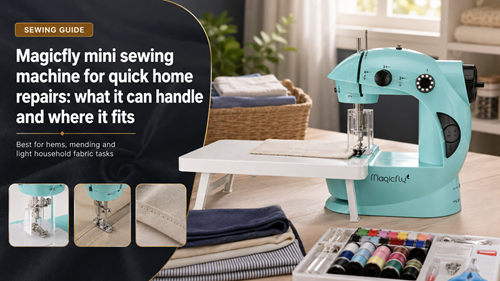
The Magicfly mini sewing machine is most useful when you treat it as a compact tool for straightforward home repairs rather than a replacement for every full-size machine. For apartment dwellers, dorm rooms, occasional mending, and small craft tables, its appeal is simple: it takes little space, is easy to bring out for a short job, and can handle selected light-duty tasks without building a permanent sewing station. The key is knowing which fabrics, seams, and repairs are realistic before you begin.
How To Evaluate The Magicfly Mini Sewing Machine
Think about the repair itself before thinking about machine size. Shortening a lightweight curtain panel, closing a loose seam, practicing on cotton, or making a simple pouch asks far less from a machine than crossing a jeans side seam or attaching thick webbing. A compact machine can be convenient when the project stays inside its comfortable range.
Small machines also reward a slower workflow. Because the platform and working area are limited, fabric support matters. Clear the table, keep the project from hanging off the edge, and guide rather than pull. A stable surface and a fresh needle can make a bigger difference than trying to increase speed.
Features And Setup That Matter In Real Use
Choose Fabrics That Feed Predictably
Start with quilting cotton, light woven fabric, simple craft felt within the machine’s limits, and other materials that stay flat under the presser foot. Slippery knits, thick denim crossings, and bulky layered repairs can expose the limits of a mini platform quickly.
Keep The Thread Path Simple
Rethread from the beginning whenever stitches suddenly change. Confirm that the presser foot is raised while threading if the design requires it, seat the thread fully in the tension path, and use a correctly wound bobbin. Many apparent “machine problems” start with a missed guide or poorly seated bobbin.
Support The Fabric Instead Of Pulling It
Let the feed mechanism move the material. Pulling from behind can bend the needle, change stitch length, and create skipped stitches. On a small table, use your hands to keep the fabric level so its weight does not drag the seam sideways.
Store The Machine Ready For The Next Repair
Keep the foot control or power components, bobbins, a small needle pack, thread snips, seam ripper, and test fabric together. A compact repair machine is most useful when everything needed for a ten-minute job can be retrieved in one trip.
Build A Workflow Around The Project, Not The Marketing Label
Plan Magicfly compact stitch projects around short seams and easy fabric handling. Simple pillow repairs, fabric organizers, practice squares, light hems, and small craft pieces are better matches than heavy multi-layer construction. Keeping the project compact makes the small throat and table easier to manage.
A stable Magicfly tabletop sewing setup matters because vibration and hanging fabric can pull a light machine out of position. Place it on a firm table, leave room behind the needle, and support the fabric so the project does not hang from the machine bed while you sew.
For Magicfly lightweight mending tasks, inspect the damaged area before stitching. Trim loose threads, align the original seam allowance, and test the stitch on a hidden section or scrap. A clean preparation usually produces a better repair than trying to sew directly over a frayed, uneven edge.
When using it as a Magicfly beginner repair machine, practice starting, stopping, turning a corner, and back securing on scrap fabric first. Beginners gain more control from repeating a short straight seam than from moving immediately to a finished garment where mistakes are harder to undo.
For Magicfly small-space sewing, keep only the tools needed for the current job on the table. A small tray for bobbins, needles, clips, and scissors prevents clutter from crowding the fabric path, and the machine can be packed away as soon as the repair is finished.
Treat Magicfly portable craft use as convenience, not an invitation to sew on an unstable surface. Whether you move the machine between rooms or take it to a craft table, set it down securely, organize the power source, and make sure there is enough room for the project to feed freely.
Test A Repair Before Committing The Garment
- Match the needle and thread to a light or medium fabric that falls within the machine’s realistic range.
- Use a scrap with the same number of layers as the repair.
- Sew slowly from a complete stop and listen for strain or needle deflection.
- Turn a corner and confirm the fabric can pivot without forcing it.
- Check both sides for loops, skipped stitches, or severe puckering.
- If the sample struggles, move the job to a full-size machine instead of forcing the repair.
Quick Repairs And Realistic Expectations
| Repair | Good Fit? | What To Watch |
|---|---|---|
| Light seam opening | Usually | Match original seam allowance |
| Cotton hem | Usually | Keep fold thin and even |
| Small craft pouch | Usually | Support fabric on table |
| Jeans crossed hem | Often not | Bulky ridge can exceed capacity |
| Upholstery or webbing | No | Use a stronger appropriate machine |
Common Mistakes That Reduce Results
- Pulling fabric to make the machine feed faster
- Using a dull or bent needle
- Trying to cross bulky seams at full speed
- Letting fabric hang off the small table
- Assuming portability means heavy-duty capability
If a mini machine repeatedly struggles with a specific material, change the job rather than forcing the motor or needle. A compact repair tool is valuable because it is convenient inside its range; pushing beyond that range can damage fabric, needles, timing, or the machine itself.
Check Manufacturer Guidance Before Final Setup
For needle selection and replacement guidance, the SCHMETZ needle guide is a useful external reference. Correct needle type and size are especially important on a small machine because there is less margin for needle deflection when a seam becomes thick or uneven.
Use The Magicfly Mini Sewing Machine Where Compact Convenience Wins
The Magicfly mini sewing machine earns its place in a small home when it handles the quick jobs you would otherwise postpone. Keep expectations realistic, prepare the fabric carefully, and stop when a seam becomes too bulky for comfortable feeding.
For beginners, the best value is also practice: short seams, controlled starts, simple hems, and basic mending build confidence without requiring a large permanent setup. When projects grow heavier or more complex, use the Magicfly mini sewing machine as the convenient secondary tool rather than forcing it to do a full-size machine’s job.
Frequently Asked Questions
Can a Magicfly mini sewing machine hem jeans?
A light denim fold may be possible on some setups, but bulky crossed hems can exceed a mini machine’s practical feeding and penetration limits. Test a matching sample first.
Is a mini machine good for complete garments?
It can handle selected simple construction, but limited workspace, feeding, and stitch options make a full-size machine more practical for regular garment sewing.
What fabric should a beginner start with?
A stable woven cotton is easier to control than stretchy, slippery, or very thick fabric.
Why are my stitches skipping?
Common causes include a bent or unsuitable needle, incorrect threading, pulling the fabric, poor bobbin setup, or a seam that is too thick for the machine.
How should I store a compact sewing machine?
Keep it dry, covered, and protected from impact, with the power components and a small repair kit stored together.
