


Before choosing sewing machines, you must understand industrial vs home sewing machines differences. Both products have different purposes, so buyers are often confused between the two. Home equipment is designed with convenience in mind. Industrial equipment, on the other hand, emphasizes speed and heavy-duty performance.
Choosing between a home and industrial sewing machine depends on your workload, fabric types, available space, and the kind of projects you plan to complete. Understanding these differences makes it easier to select a machine that fits your sewing needs.
What Are Sewing Machines for Home Use?
Home sewing machines are designed for everyday personal sewing projects. They are generally compact, convenient, and beginner-friendly, making them suitable for beginners, hobbyists, repairs, crafts, and general home sewing.
Many home sewing machines offer multiple stitch options for repairs, decorative sewing, crafts, and everyday projects. They are designed to provide versatility and convenient operation for typical household sewing needs.
When space is limited, home sewing machines are often the better choice because they are compact, easier to store, and more practical for smaller workspaces.
What Exactly Are Industrial Sewing Machines?
Industrial sewing machines are designed for specialized, high-volume sewing tasks. Compared with typical home machines, they usually prioritize speed, durability, and consistent performance for repeated work in garment production, upholstery, leatherwork, and other professional settings.
Features of Industrial Machinery
Industrial sewing machines are built for consistent performance during repetitive sewing tasks. Depending on the machine type, they can handle materials such as denim, canvas, upholstery fabric, and leather more effectively than many standard home machines.
Why Choose an Industrial Sewing Machine?
- Stitching at high speed for bulk production.
- Stronger motors for handling heavier fabrics and demanding sewing tasks.
- Even stitching quality.
- Designed for extended and repetitive sewing sessions in professional environments.
Industrial sewing machines are well suited to businesses and professionals that need consistent stitching, faster production, and reliable performance for repetitive sewing tasks.
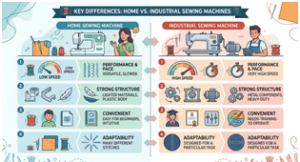
Differences between industrial and home sewing machines
The main differences between industrial and home sewing machines come down to speed, durability, specialization, portability, and the type of sewing work each machine is designed to handle.
Performance and Pace
Industrial machines run at very high speeds. Home machines tend to be slower but more versatile.
Strong Structure
Industrial sewing machines typically use heavier-duty frames and components designed for repeated professional use, while home sewing machines are generally built to balance durability with portability and everyday convenience.
Ease of Use
Home sewing machines are generally more beginner-friendly because they offer familiar controls and versatile stitch options. Industrial machines are more specialized and may require additional practice depending on the machine type and intended task.
Versatility and Specialization
Home sewing machines often include multiple stitch options for different projects, while industrial sewing machines are typically optimized for specific operations such as straight stitching, overlocking, or heavy-material sewing.
Industrial vs Home Sewing Machine Comparison Table
| Feature | Industrial Sewing Machine | Home Sewing Machine |
| Speed | Very High | Moderate |
| Durability | Heavy-duty | Light to moderate |
| Stitch Options | Limited | Multiple |
| Portability | Low | High |
Performance vs Versatility
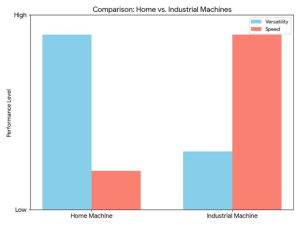
- Home sewing machines are designed for versatility, allowing users to work with multiple stitch types, fabrics, and project styles. Industrial sewing machines are generally more specialized, with individual models optimized for specific stitching operations or production tasks.
- Industrial sewing machines are designed for efficient, repetitive production work and generally operate at higher sewing speeds than typical home machines.
- Industrial sewing machines often excel at specialized production tasks, while home sewing machines are better suited to users who want to switch between different stitches, fabrics, and project types.
Selecting the Perfect Sewing Machine for You
The right sewing machine depends on your workload, fabric types, available workspace, sewing experience, and whether you need versatility or specialized production performance.
For Beginners and Hobbyists
Home sewing machines are usually the more practical choice for beginners and hobbyists because they offer versatile stitch options, easier controls, and flexibility for different types of sewing projects.
For Small Sewing Businesses
For a small sewing business, the right machine depends on workload, fabric types, and how frequently the same sewing tasks are repeated. A heavy-duty home machine may suit occasional production, while an industrial sewing machine can be more appropriate for frequent or specialized work.
Production on a grand scale
Industrial sewing machines are ideal for high-volume production because they provide faster stitching, consistent performance, and greater durability for demanding workloads.
How to Make the Right Choice?
Matching the machine to your actual workload and project requirements will help you choose between a versatile home sewing machine and a more specialized industrial model.
- Consider how often and how long you plan to sew.
- Think about the fabrics and materials you will use most often.
- Decide whether you need versatile stitch options or a machine specialized for one type of work.
- Compare your available workspace and budget before making a final choice.
Which Sewing Machine Is Right for You?
Choose a home sewing machine if you value versatility, portability, and convenient operation for repairs, crafts, and everyday sewing projects. An industrial sewing machine is generally better suited to repetitive, high-volume, or specialized production work. The best choice depends on your workload, materials, available workspace, and sewing goals.
FAQs
1. What is the main difference between industrial and home sewing machines?
Industrial sewing machines are generally designed for specialized, repetitive, and higher-volume work, while home sewing machines focus more on versatility, portability, and everyday sewing projects.
2. Can beginners use industrial sewing machines?
Yes. However, some industrial machines may require additional practice because they are designed for specific sewing operations. Beginners often find home sewing machines easier to learn and more versatile.
3. Which sewing machine is better for thick fabrics?
The best choice depends on the material and machine type. Heavy-duty home machines and certain industrial machines can handle materials such as denim, canvas, upholstery fabric, or leather, but not every machine is designed for every heavy material.
4. Are home sewing machines portable?
Many home sewing machines are easier to move and store than industrial setups, although portability varies depending on the model, size, and weight.
5. Should I choose a home or industrial sewing machine?
Choose a home sewing machine for repairs, crafts, garment sewing, and varied everyday projects. Consider an industrial sewing machine when you need repetitive, specialized, or higher-volume production work.
