

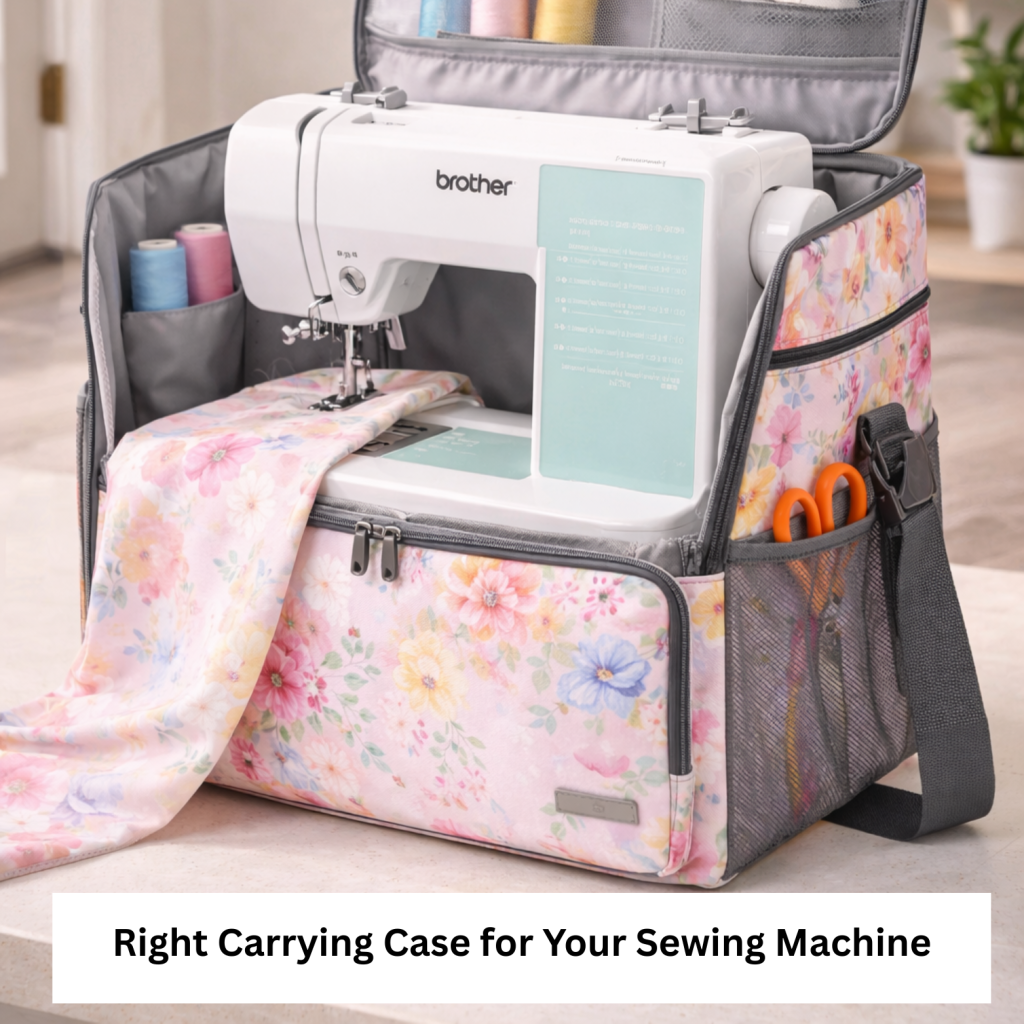
Choosing the right sewing machine case starts with your machine’s dimensions, weight, how often you move it, and how much accessory storage you need. A padded tote works well for light everyday transport, while a hard case provides stronger structural protection and a rolling sewing machine case can make a heavier machine easier to move. Before buying, compare the case’s internal dimensions with your sewing machine and allow enough space for the power cord, foot controller, and essential accessories.
What Should You Look for in a Sewing Machine Case?
Choose a sewing machine case that fits your machine without allowing excessive movement. Look for a reinforced base, protective padding, strong handles or straps, accessory compartments, and durable closures. For heavier machines or frequent transport, a rolling sewing machine case can be more practical than a standard carrying bag.
If you want to compare available designs, explore the sewing machine carrying cases available for different machine sizes, storage needs, and transportation preferences.
How to Choose a Sewing Machine Case That Fits Properly
A properly fitted sewing machine case should provide enough room for the machine while limiting unnecessary movement during storage or transportation. Before choosing a case, measure your sewing machine from its widest, deepest, and tallest points. Include fixed handles, spool pins, or other components that extend beyond the main body.
Compare these measurements with the internal dimensions of the sewing machine case, rather than relying only on the external size listed by the manufacturer. A small amount of extra room can make loading and unloading easier, but excessive unused space may allow the machine to shift inside the case.
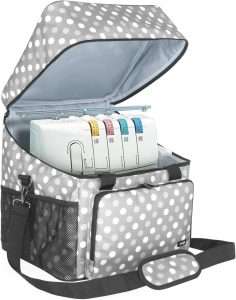
For regular storage at home, a lightweight padded sewing machine bag may be suitable. If you regularly attend sewing classes, workshops, quilting groups, or travel with your machine, consider stronger padding, reinforced handles, a supportive base, and secure closures.
Measure Your Sewing Machine Before Buying a Case
Accurate measurements are one of the most important factors when selecting a sewing machine carrying case. Measure the machine before comparing cases instead of assuming that a standard or universal case will fit.
- Width: Measure from the farthest point on the left side of the sewing machine to the farthest point on the right.
- Depth: Measure from the front of the machine to its farthest point at the back.
- Height: Measure from the bottom of the machine to its highest fixed point, including permanent handles or components.
- Weight: Check the weight of the machine so the case, handles, straps, base, or wheels can adequately support it.
Do not choose a case only because the product description mentions your sewing machine brand. Models from the same manufacturer can have significantly different measurements.
Hard Case vs Padded Sewing Machine Bag
The best type of sewing machine case depends on where you store the machine, how frequently you transport it, and how heavy it is. A hard sewing machine case provides a rigid exterior, while a padded carrying bag is generally lighter and easier to transport. A rolling case offers another option for machines that are uncomfortable to carry by hand.
| Case Type | Best For | Main Advantage | Consideration |
|---|---|---|---|
| Hard Sewing Machine Case | Home storage and stronger structural protection | Rigid exterior | Usually heavier to carry |
| Padded Sewing Machine Bag | Classes and occasional transportation | Lightweight and portable | Less rigid than a hard case |
| Rolling Sewing Machine Case | Heavy machines and frequent transportation | Easier to move | Requires additional storage space |
| Compact Carrying Bag | Small and portable sewing machines | Easy to carry and store | May provide less accessory storage |
A hard case can be useful when rigid exterior protection is important, while a padded tote may be more convenient for everyday transportation. Instead of choosing only by appearance, consider the machine’s dimensions, weight, transportation frequency, and the amount of accessory storage you need.
When a Rolling Sewing Machine Case Makes Sense
A rolling sewing machine case is particularly useful when carrying the machine by hand becomes uncomfortable. Wheels can make transporting heavier sewing machines to classes, quilting groups, workshops, or other locations much easier.
When comparing rolling cases, look for durable wheels, a stable base, a comfortable telescoping handle, and sufficient internal support. Always check both the internal dimensions and recommended weight capacity before placing a sewing machine inside.
Check Padding, Base Support, and Construction
Padding can help protect the machine from minor bumps during transportation, but the bottom of the case is equally important. A reinforced or rigid base provides additional support, particularly for heavier sewing machines.
Check handles, shoulder straps, stitching, seams, zippers, and other closures before choosing a carrying bag. These components handle much of the machine’s weight during lifting and transportation.
You can also browse related sewing machine parts and accessories when planning how much additional storage space you may need inside your carrying case.
Storage for Foot Pedals, Cords, and Sewing Accessories
A practical sewing machine carrying case should provide space not only for the machine but also for the accessories you use regularly. Separate pockets or compartments can help organize the power cord, foot controller, presser feet, bobbins, needles, thread, small tools, and instruction manual.
Avoid placing heavy, sharp, or loose accessories directly against the sewing machine. During transportation, these items may move around and make contact with the machine. Use separate pockets or small accessory containers whenever possible.
How to Pack a Sewing Machine in a Carrying Case
- Turn off and unplug the sewing machine before packing it.
- Remove loose accessories and detachable components.
- Secure movable components according to the manufacturer’s instructions.
- Place the power cord and foot controller in separate storage compartments.
- Keep bobbins, needles, presser feet, and small sewing tools organized in appropriate pockets or containers.
- Position the machine securely so it does not move excessively inside the case.
- Close all zippers, straps, buckles, or fasteners before lifting the carrying case.
If you regularly use different feet and attachments, keeping them organized separately can also make it easier to choose the correct accessory for each sewing project instead of storing everything loosely around the machine.
For longer-term storage, keep the sewing machine case in a clean and dry area away from excessive moisture, direct heat, and locations where it could easily be knocked over.
Choosing a Case for Singer, Brother, Janome, and Other Sewing Machines
Sewing machine cases are available for many popular brands, including Singer, Brother, Janome, and others, but compatibility should not be determined by brand name alone. Different machines produced by the same manufacturer can have very different dimensions, shapes, and weights.
Measure your specific model and compare those measurements with the case manufacturer’s listed internal dimensions. If you are comparing different machine sizes or styles before selecting a case, browse the available sewing machines to understand how dimensions and machine types can vary.
Some carrying cases are marketed as universal because they are designed to accommodate several standard-size sewing machines. However, “universal” does not necessarily mean that every sewing machine will fit. Actual dimensions should always determine compatibility.
If your machine includes an extension table, embroidery unit, knee lifter, or other large attachments, consider whether those items will fit inside the carrying case or require separate storage.
Sewing Machine Case Buying Checklist
Before choosing a sewing machine case or carrying bag, review the following points:
- Machine dimensions: Measure the width, depth, and height of your sewing machine.
- Internal case dimensions: Confirm that the actual interior measurements provide enough room for the machine.
- Machine weight: Make sure the case and its handles or straps are designed to support the machine.
- Padding: Look for suitable protection around the machine’s sides and corners.
- Base support: Consider a reinforced bottom for heavier machines.
- Handles and straps: Choose carrying options suitable for how frequently you move your machine.
- Wheels: Consider a rolling case when transporting a heavier sewing machine regularly.
- Accessory storage: Look for compartments for the foot pedal, cords, presser feet, bobbins, needles, and other essentials.
- Closures: Check that zippers, straps, and fasteners keep the case securely closed.
- Compatibility: Verify actual dimensions instead of relying only on terms such as “universal fit.”
Which Sewing Machine Case Is Right for You?
The right sewing machine case depends mainly on the machine’s size, weight, and how frequently it needs to be transported. For occasional movement and home storage, a padded sewing machine bag may provide a practical balance between protection and portability. A hard sewing machine case offers a more rigid structure, while a rolling case can make heavier machines easier to move.
Always measure your sewing machine before selecting a case and compare those measurements with the case’s internal dimensions. Padding, reinforced construction, accessory storage, comfortable handles, secure closures, and suitable weight capacity are generally more useful considerations than selecting a carrying case based only on appearance or brand name.
Choosing a case that matches both your machine and the way you use it can make storage more organized and transportation more convenient.
Frequently Asked Questions About Sewing Machine Cases
How do I know what size sewing machine case I need?
Measure your sewing machine’s width, depth, and height at its largest points and compare those measurements with the internal dimensions provided for the case. Allow enough room to insert and remove the machine comfortably without leaving excessive empty space.
Are sewing machine carrying cases universal?
Some carrying cases are marketed as universal because they are designed to fit many standard-size sewing machines. This does not guarantee compatibility with every model. Always compare your sewing machine’s measurements with the internal dimensions of the case before choosing one.
Is a hard case better than a sewing machine bag?
A hard case generally provides a more rigid exterior, while a padded sewing machine bag is usually lighter and easier to carry. The better option depends on the weight of your sewing machine, where it will be stored, and how frequently it will be transported.
Are rolling sewing machine cases worth it?
A rolling sewing machine case can be useful for heavier machines or for people who frequently transport their machine to sewing classes, quilting groups, workshops, or events. Wheels reduce the need to carry the full machine weight by hand.
Can I store a sewing machine in a carrying case?
Yes. A properly sized carrying case provides an organized storage location and can help protect the sewing machine from dust and minor accidental contact. Keep the case in a clean and dry location and follow the machine manufacturer’s storage recommendations.
What should I keep in a sewing machine bag?
Common items include the power cord, foot controller, bobbins, needles, frequently used presser feet, thread, small tools, and the sewing machine manual. Separate storage compartments help keep these accessories organized and prevent them from moving directly against the machine.
