


In the fast-paced world of industrial sewing, efficiency isn’t just a buzzword—it’s a necessity. As manufacturers strive to meet rising demands and tight deadlines, every second counts on the production floor. The adage “time is money” rings accurate now more than ever, making it crucial for businesses to adopt technologies that streamline operations.
One such innovation is automatic threading technology, which revolutionizes how we think about sewing. Gone are the days of fumbling with spools and needles; today’s machines do the heavy lifting, allowing workers to focus on what matters: quality craftsmanship and productivity. Let’s dive into how automatic threading transforms industrial sewing from a labor-intensive task into an efficient art form that’s changing the game for manufacturers around the globe.
What is Automatic Threading and How Does it Work?
Automatic threading is a game-changer in the industrial sewing landscape. This technology simplifies inserting the thread into needles, making it quicker and more efficient.
The mechanism typically involves a series of automated components that guide the thread through various pathways. Sensors detect when a needle is unthreaded, triggering the system to re-thread automatically.
This process often utilizes pneumatic or electrical systems for precision control. When the machine identifies an issue, it resolves it without human intervention—saving time during production runs.
Many modern machines have user-friendly interfaces, allowing operators to monitor performance easily. The seamless integration of automatic threading enhances workflow significantly while reducing operational downtime.
This innovation is crucial in maintaining productivity levels across manufacturing lines in an industry where speed and accuracy are paramount.
How Automatic Threading Saves Time and Increases Efficiency
Automatic threading revolutionizes industrial sewing. By eliminating manual threading, it dramatically reduces setup time. This means workers can focus more on production rather than troubleshooting tangled threads. With quicker changeovers between tasks, the overall workflow becomes smoother. Machines equipped with automatic threading can switch from one project to another in a fraction of the time previously needed.
Furthermore, fewer interruptions lead to greater output. As machines run continuously without frequent pauses for re-threading, production rates soar.
This efficiency doesn’t benefit manufacturers and enhances job satisfaction. Workers spend less time dealing with frustrating thread issues and more time creating quality products.
In today’s fast-paced environment, every second counts. Automatic threading ensures that businesses remain competitive while maintaining high standards in their sewing operations.
Precision Stitching with Automatic Threading
Precision stitching is a game changer in industrial sewing. Automatic threading systems ensure that every stitch is consistent, reducing the risk of errors.
When machines are set up correctly, they deliver flawless seams every time. This reliability allows manufacturers to maintain high-quality standards across large production runs. With automatic threading, even intricate designs can be executed with remarkable accuracy. The technology minimizes human intervention, often leading to mistakes during manual threading.
Moreover, these machines adapt quickly to different materials and thread types without compromising precision. This versatility is crucial for industries requiring unique fabric handling.
Workers can focus on creative aspects rather than tedious tasks. As a result, the entire workflow becomes more streamlined and efficient while maintaining impeccable quality control throughout.
Different Types of Automatic Threading Machines
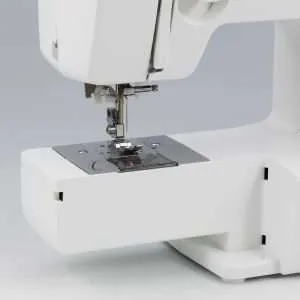
Automatic threading machines come in various types, each designed to cater to specific industrial sewing needs. One popular type is the high-speed automatic needle threader. This machine reduces manual intervention and enhances productivity by quickly threading needles.
Another variant is the bobbin winder with automatic threading capabilities. It efficiently prepares multiple bobbins simultaneously, ensuring that production runs smoothly without interruptions.
Specialized heavy-duty sewing machines are available for those focused on heavy-duty fabrics. These models feature robust mechanisms that handle thicker threads while maintaining precision in stitching.
Multi-needle automatic threading systems are used for intricate designs. They streamline complex operations by managing several threads simultaneously, making them ideal for embroidery applications.
Each type of machine brings unique features that significantly improve efficiency and accuracy in the industrial sewing landscape.
Future Developments in Automatic Threading Technology
As technology continues to evolve, the future of automatic threading in industrial sewing looks promising. Innovations could further streamline processes and enhance user experience.
One area being explored is artificial intelligence integration. AI systems could analyze fabric types and adjust threading techniques automatically, ensuring optimal stitching every time. This adaptability can significantly reduce errors.
Moreover, advancements in robotics may lead to machines capable of self-threading with unprecedented precision. Imagine a setup where maintenance becomes minimal due to smart sensors predicting wear and tear before it happens.
Sustainability is another focus for upcoming developments. Manufacturers are working on eco-friendly materials for thread production, aligning with global sustainability goals while maintaining high-performance levels.
These emerging trends indicate a shift towards more intelligent, efficient industrial sewing solutions tailored to modern demands. The potential impact on productivity and quality is inspiring.
Conclusion
As the landscape of industrial sewing continues to evolve, automatic threading technology stands out as a significant advancement. It streamlines processes and enhances productivity in once unimaginable ways. With its ability to save time, increase efficiency, and ensure precision stitching, this innovation reshapes how manufacturers approach their work.
The range of available machines caters to various industry needs. Whether for high-volume production or specialized tasks, there’s an automatic threading solution for nearly every application. As technology progresses, we can only anticipate even more remarkable developments on the horizon.
Embracing these advancements boosts operational capabilities and sets companies up for success in increasingly competitive markets. The future of industrial sewing looks promising, with automatic threading at the forefront of technological progress.
