

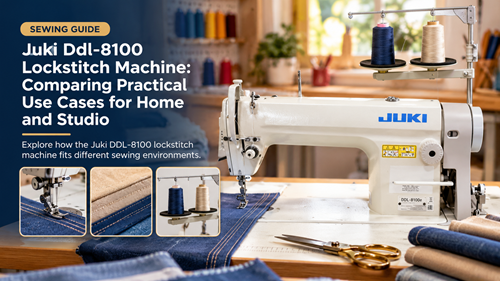
Juki DDL-8100 lockstitch machine deserves a practical workflow check before it becomes part of a regular sewing, embroidery, serging, or transport routine. This guide is written for alteration shop operators and focuses on comparing practical use cases for home and studio. Instead of treating settings or accessories as isolated features, the goal is to build a repeatable process that can be tested on real materials, documented, and reproduced when the next project begins.
How To Plan The Juki DDL-8100 Lockstitch Machine Workflow
Begin with the finished result. Write down the material, seam or design type, finished dimensions, number of layers, required accessories, and the level of repeatability you expect. For alteration shop operators, this prevents a common mistake: changing machine settings before the real project requirements are clear.
A good workflow separates preparation from diagnosis. Prepare the machine or accessory correctly, create a baseline sample, and then change one variable at a time. If several things change at once, it becomes difficult to know whether the improvement came from threading, needle choice, feeding, tension, stabilizer, foot selection, or operator technique.
Use Juki DDL-8100 lockstitch machine setup as the starting routine, then keep the same project materials and sequence long enough to tell whether a change really improves the result.
Juki DDL-8100 Lockstitch Machine Setup And Compatibility Checks
Define The Workload Before Choosing The Location
List the materials, seam types, daily or weekly hours, and number of repeated pieces. A dedicated lockstitch machine makes more sense when straight-seam volume is consistent than when the user needs many decorative or utility stitches.
Plan The Table, Motor, And Electrical Setup
Industrial-style machines are workstation purchases, not just machine heads. Measure the room for the table, operator chair, material handling, and service access, and confirm the exact seller package includes the components you expect.
Compare Noise And Portability Requirements
A home workspace may share walls or need to be packed away. A studio can often dedicate permanent floor space. Decide whether a fixed production station fits the environment before comparing speed or motor claims.
Separate Straight-Stitch Strength From Versatility
A lockstitch specialist can be excellent at repeatable straight seams but does not replace a versatile domestic machine for buttonholes, zigzag, decorative work, or easy portability. The right choice depends on the seam mix.
Before adding fitted parts or changing the workflow, confirm Juki DDL-8100 lockstitch machine compatibility against the exact model or attachment point. Similar-looking machines and accessories can differ in clearances, bobbins, feet, hoops, motors, or electrical details.
Plan Juki DDL-8100 lockstitch machine accessories around the first projects you will actually make. Buy or prepare the items that solve a real setup problem instead of collecting extras that make the workstation harder to organize.
Build A Repeatable Project Workflow
Keep the test conditions close to the real job. Use the same fabric family, thread, needle, accessory or hoop, seam construction, and working speed whenever possible. A sample that is easier than the final project can hide the exact problem that later appears on a finished garment, gift, quilt, or customer order.
Evaluate Juki DDL-8100 lockstitch machine stitch quality on repeatable samples, not on one lucky seam or stitch-out. Compare the front and back, transitions, corners, dense areas, and the result after the fabric is handled or stretched as it will be in use.
Build Juki DDL-8100 lockstitch machine user tips into a short written checklist. A repeatable routine helps beginners and experienced users notice when a needle, thread, foot, hoop, feed setting, or preparation step changed between projects.
Turn Juki DDL-8100 lockstitch machine project guide into two or three representative samples before committing to a larger batch. Those samples reveal whether the machine, accessory, or case fits the work rather than only fitting the product description.
Save the successful setup. A short note with material, thread, needle, stitch or design setting, foot or hoop, and any special preparation turns one good result into a repeatable system. That record is especially useful when the same project returns weeks later or another person needs to reproduce it.
A Practical Test Before The Full Project
- List the five most common seams in the planned workload.
- Estimate weekly sewing hours and repeated-piece volume.
- Measure permanent table and operator space.
- Confirm the exact motor, stand, table, and electrical package.
- Test the real fabric at working speed, not only maximum speed.
- Compare the dedicated lockstitch workflow with keeping a versatile home machine.
Judge the sample after the entire process, not only while the machine is running. Check the front and back, seam or design alignment, thread balance, fabric distortion, edge condition, stretch or recovery where relevant, and how the result looks after normal handling. If a problem appears, return to the baseline and make one controlled change.
What To Check At A Glance
| Project Or Symptom | Priority Check | Warning Sign |
|---|---|---|
| Occasional home repairs | Limited fit | Versatile domestic machine may suit better |
| Dedicated alteration desk | Potentially strong fit | Straight-seam volume matters |
| Small studio production | Strong fit if workflow matches | Plan service and table space |
| Multi-stitch craft room | Specialized role only | Needs companion machine for other stitches |
Common Mistakes To Avoid
- Buying an industrial head without checking the package
- Ignoring table footprint and operator space
- Assuming high speed is useful for every seam
- Expecting zigzag or decorative versatility from a lockstitch specialist
- Underestimating service and setup requirements
These mistakes are easy to make because they can produce a usable result once and still fail on the next project. Consistency comes from controlled preparation, documented settings, and realistic samples rather than from chasing a single “perfect” number.
Troubleshoot In A Fixed Order
When the result changes, start with the simplest reversible checks: threading or installation, needle or consumable condition, material preparation, bobbin or thread path, foot or hoop fit, feeding, and the normal user-adjustable settings. Only after those checks should you consider deeper mechanical causes. This order protects the machine from unnecessary adjustment and makes service information more useful.
For persistent problems, use Juki DDL-8100 lockstitch machine troubleshooting together with the current manufacturer documentation. Record the exact symptom, material, setup, and changes already tested before making a mechanical adjustment or seeking service.
Take a photo of the sample and write down the conditions that produced it. That small record can save time when comparing a later test, asking a technician for help, or returning to a project after a long break.
Use The Juki DDL-8100 Lockstitch Machine With A Repeatable System
The best results from the Juki DDL-8100 lockstitch machine come from matching the setup to a real project, testing the difficult part before the final piece, and recording the combination that works. For alteration shop operators, that approach reduces wasted material and makes it easier to separate a machine limitation from a preparation or compatibility problem.
Keep the process simple enough to repeat: prepare, test, inspect, change one variable, and save the final setup. That discipline is more useful than copying settings from a different fabric or project and gives the Juki DDL-8100 lockstitch machine a fair test under the conditions that actually matter.
Frequently Asked Questions
Is the Juki DDL-8100 lockstitch machine practical for home use?
It can be practical when the user has dedicated space and regular straight-stitch work, but it is less flexible than a multi-stitch domestic machine.
What makes it more suitable for a studio?
A permanent workstation, repeat seam types, higher volume, and easier access for maintenance make a dedicated lockstitch setup more useful.
Should I compare the motor package?
Yes. Seller packages can differ, so verify the exact motor, table, stand, electrical requirements, and included components.
Can it replace a home sewing machine?
Not for every user. A lockstitch machine focuses on straight seams, while many home projects need zigzag, buttonholes, decorative stitches, or portability.
What is the best pre-purchase test?
Sew the actual fabric and seam construction at the speed you expect to use, then judge control, feeding, stitch consistency, noise, and workstation comfort.
