
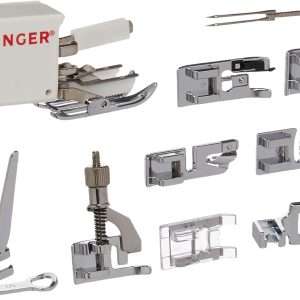

Detail Description
Unlocking Creativity: Mastering the Embroidery Sewing Foot for Stunning Designs
Embroidery is more than just a craft; it’s a way to express your creativity and bring fabric to life. Whether adding a personal touch to home decor or crafting unique gifts, the right tools can make all the difference. Enter the embroidery sewing foot—a game-changer that elevates your stitching skills and opens up a world of possibilities. With this versatile attachment, you can easily create intricate designs, transforming ordinary fabrics into stunning artistic expressions. Ready to unlock your creative potential? Let’s dive into everything you need to know about mastering the embroidery sewing foot!
Types of Embroidery Sewing Foot and Their Uses
Several types of embroidery sewing feet are designed for specific techniques and projects. The most common is the open-toe foot, which provides a clear view of your stitching area. This feature allows you to navigate complex patterns without missing a stitch.
Then there’s the free-motion foot, which is excellent for artistic designs that require complete control over fabric movement. It’s perfect for creating swirls and loops in freestyle embroidery.
Walking feet are another favorite among quilters. It helps manage multiple layers of fabric while ensuring even feeding—ideal when working with thicker materials or intricate quilted designs.
Consider the twin-needle foot to add decorative lines or double-needle effects. This foot enables you to work with two threads simultaneously, giving your project an extra flair without much effort. Each type opens up exciting creative avenues just waiting for exploration!
Choosing the Right Embroidery Sewing Foot for Your Project
Selecting the right embroidery sewing foot can make all the difference in your project. It’s essential to consider the type of fabric you’re working with. Lightweight materials may require a foot, which is different from heavier textiles.
Look for features that suit your designs, such as open-toe or free-motion options. An open-toe foot offers visibility, allowing you to see precisely where you’re stitching. This is particularly valuable for intricate patterns.
Also, consider compatibility with your machine model. Not every foot fits every machine perfectly. Always check specifications before purchasing.
If you’re new to embroidery, start simple and gradually advance to more complex feet as you gain confidence. Experimenting can lead to unexpected creative breakthroughs!
Tips for Using an Embroidery Sewing Foot Effectively
Start with proper tension settings to unlock the full potential of your embroidery sewing foot. Adjusting the thread tension ensures smooth stitches and prevents puckering.
Next, use a stabilizer appropriate for your fabric type. It supports delicate materials during stitching and helps maintain design integrity.
Practice on scrap fabric before diving into your main project. This allows you to fine-tune your technique without risking permanent mistakes.
Keep an eye on needle choice as well. A specialty needle can enhance results significantly, especially when working with intricate designs or heavier threads.
You should also regularly clean and oil your sewing machine. Dust buildup can hinder performance and affect stitch quality over time.
Don’t hesitate to experiment! Try different patterns or layering techniques for unexpected yet stunning results in your embroidery projects.
Creative Designs You Can Achieve with an Embroidery Sewing Foot
With an embroidery sewing foot, the fabric becomes your playground. You can create intricate designs that elevate any project. Think floral motifs or geometric patterns; the options are endless.
Imagine stitching delicate lace borders on a tablecloth or personalizing clothing with monograms. The embroidery foot allows for precision and detail that standard feet can’t match.
Playing with textures opens up new possibilities, too. Layer different fabrics to add depth to your creations. Consider combining satin stitches with free-motion techniques for unique effects.
You can even experiment with color gradients using variegated threads, giving life to simple designs. Each stitch tells a story, making every piece uniquely yours.
Whether embellishing home decor or crafting gifts, this tool is essential in unlocking creative potential.